CASE STUDY
A庵 余白
Niseko & Yoichi, Hokkaido2025–2026
Q.
Where you cannot build, how do you offer the finest Japanese cultural experience in a breathtaking landscape?
During Expo 2025 Osaka, Kansai, in discussions about what Osaka should become after the Expo, we had planned a tea room where key players from Japan and abroad could keep talking. That plan never happened, but our friend Curtis Shin Holmes invited us to take it to Hokkaido. In Niseko, fifteen years of resort development led by overseas capital had left fewer and fewer moments to encounter Japanese culture. How do you offer a Japanese cultural experience on snowfields and shorelines where building is hard? That is where this project began.
A.
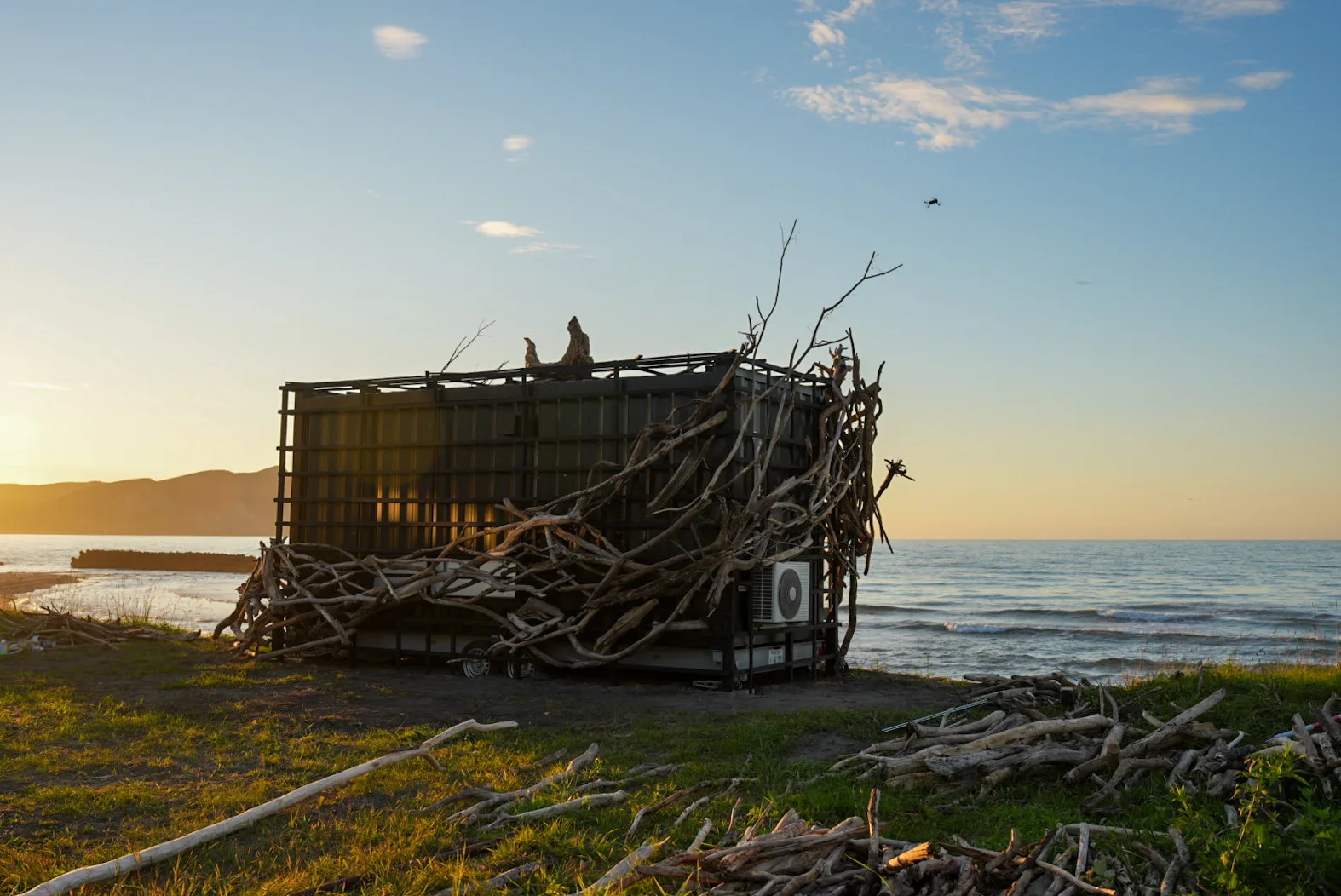
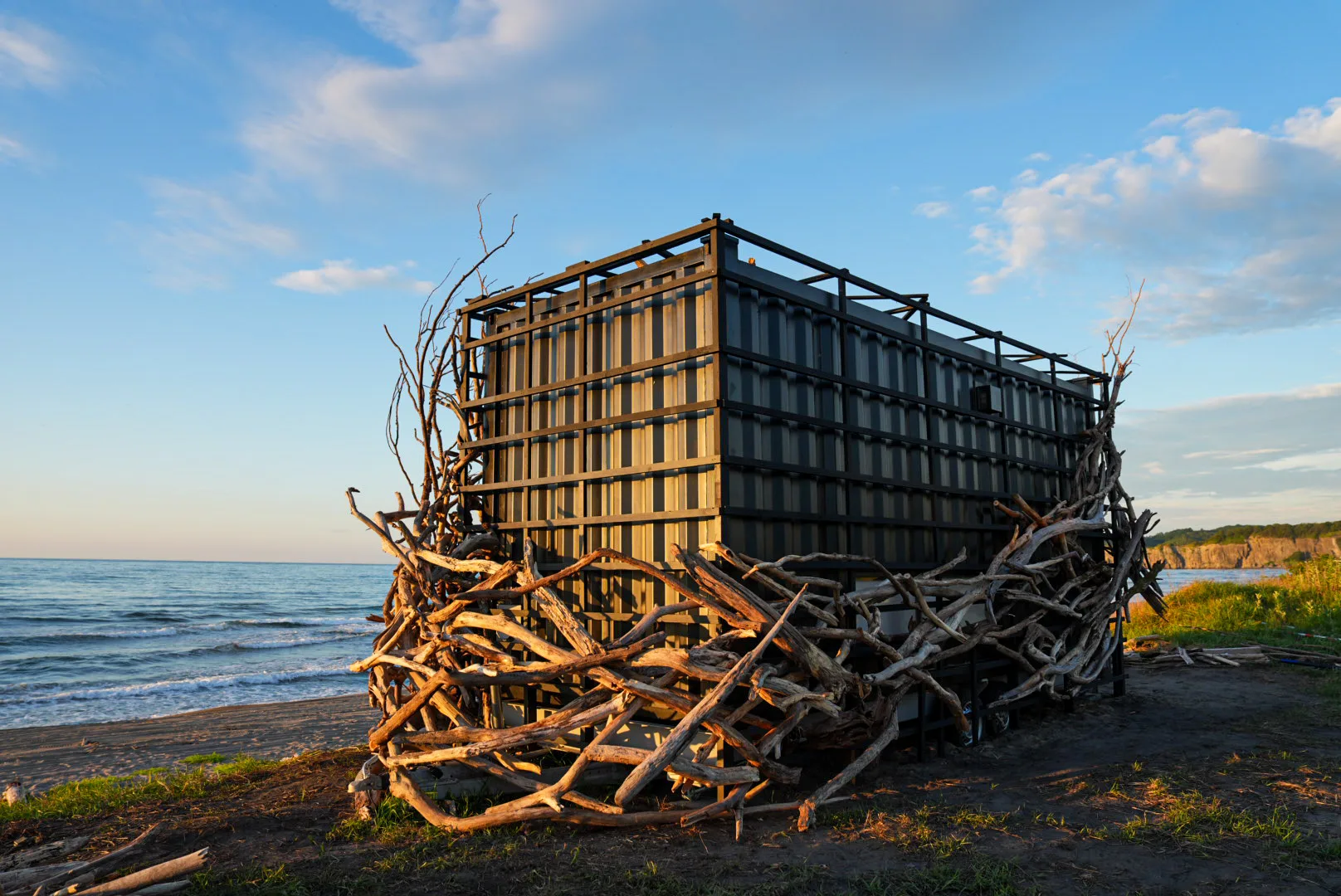
We converted a 20-foot container into a tea room, and move it with the seasons: Niseko in winter, Yoichi from summer to autumn.
Not rebuilding, but moving it
The tea room is a space of about four tatami mats, converted from a 20-foot container. It was born in Niseko in the winter of 2025, where tea was served facing snowfields and Mount Yotei. In February 2026 it stood in Shibuya, Tokyo, and from summer to autumn it moves to the shore at Yoichi.
Rather than rebuilding the architecture, we change where the same tea room stands, so the difference in land and season becomes the heart of the experience. A large window frames the outside, and the contrast with the enclosed room draws the landscape in: the tea room's idea of borrowed scenery. The name A-an plays on the Osaka phrase “eeyan” (“nice one”) and the an of a tea hut.

The tea ceremony was avant-garde to begin with
Today the tea ceremony is often seen as a stiff, traditional art. Originally, though, it was a counterculture to those in power. Bowing to enter through a low doorway put everyone at the same height, and was a kind of performance art in its time. With flowers and scrolls chosen for that day only, tea was a way of making experiences that stay in the body and cannot be fully explained in words.
We bring the tea room not to Kyoto, where the forms are complete, but to the different context of Hokkaido, because that leaves room to play without being bound by them. Visitors from abroad naturally ask why they have to bow to enter, and it is through that question that Japanese aesthetics come across without being imposed. Under the tatami we laid thin speakers, so that sound rises from the floor.
Working back from Mars, borrowing the Earth as scenery
The concept was reborn through discussion among the team. We decided an idea that was nearly settled was “not interesting”, rethought it, and in that discussion set the ultimate goal: to place a tea room on Mars. Isn't the finest borrowed scenery from a tea room, in the end, the Earth itself? People talk about going to Mars and making it habitable, but not yet about the culture needed to actually live there.
Mars is not a forecast but a thought experiment, a far point that strips away today's assumptions. If you took it to Mars, what would remain as essential? Asking that sharpens why a tea room stands where it does on Earth. With the goal of a tea room on Mars by 2040, and ideas for the Atacama Desert and the Royal Observatory Greenwich, we are testing that question now in different environments on Earth.
Because the centre is empty, other cultures can come in
The tea room is not a device for exporting Japanese culture in one direction. Like the Finnish sauna, a space rooted in its land can bring people's senses closer across differences of religion and language. The tea room is that smallest unit of culture.
A symbol at the centre that is itself empty is a structure found in Japanese thought, and it echoes the Expo's Grand Ring. Because the centre is empty, other cultures can come in as equals. Abroad, rather than only selling licences, we intend to make each edition together with local designers and cultural practitioners.
In Yoichi, getting to the tea room is the experience
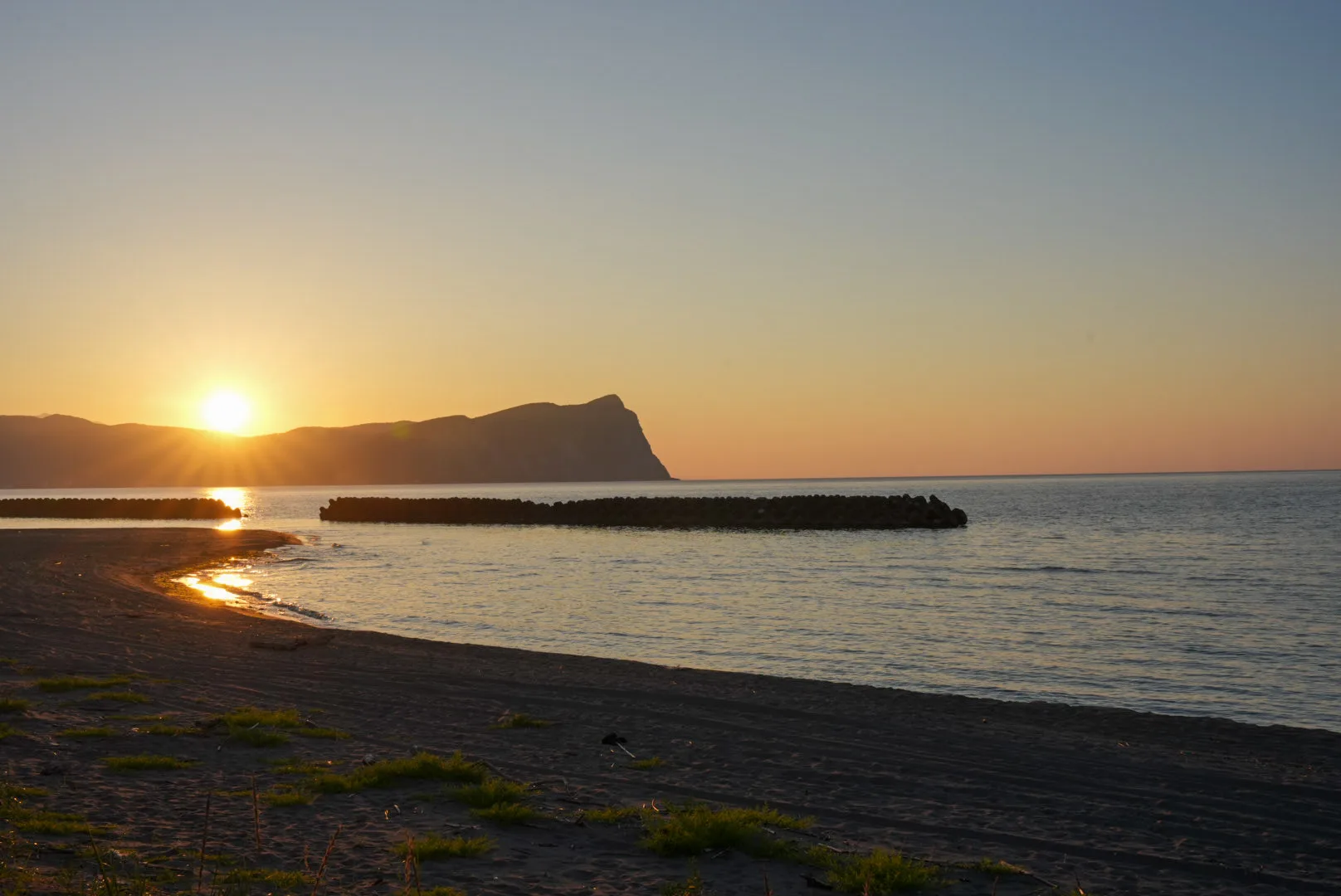
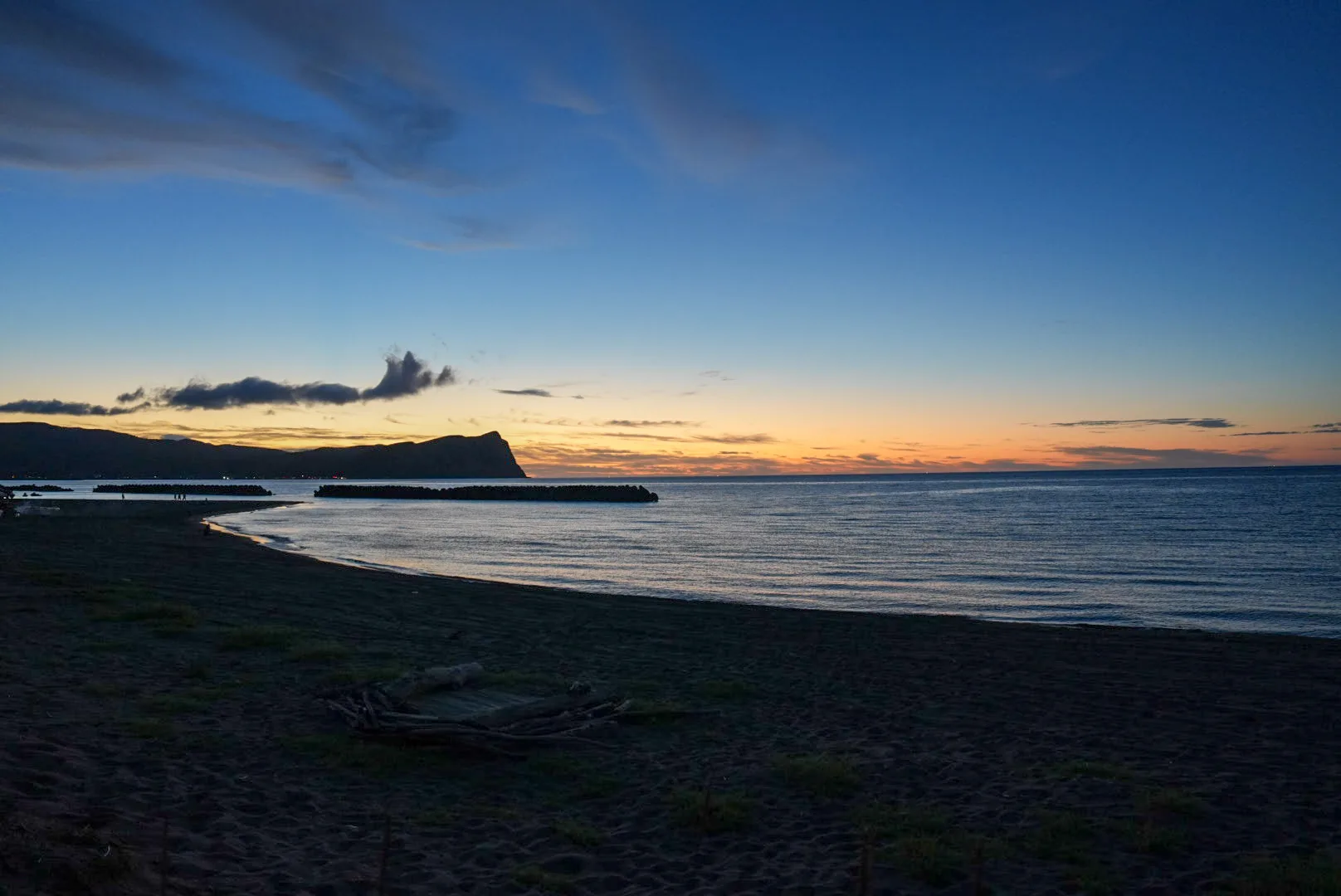
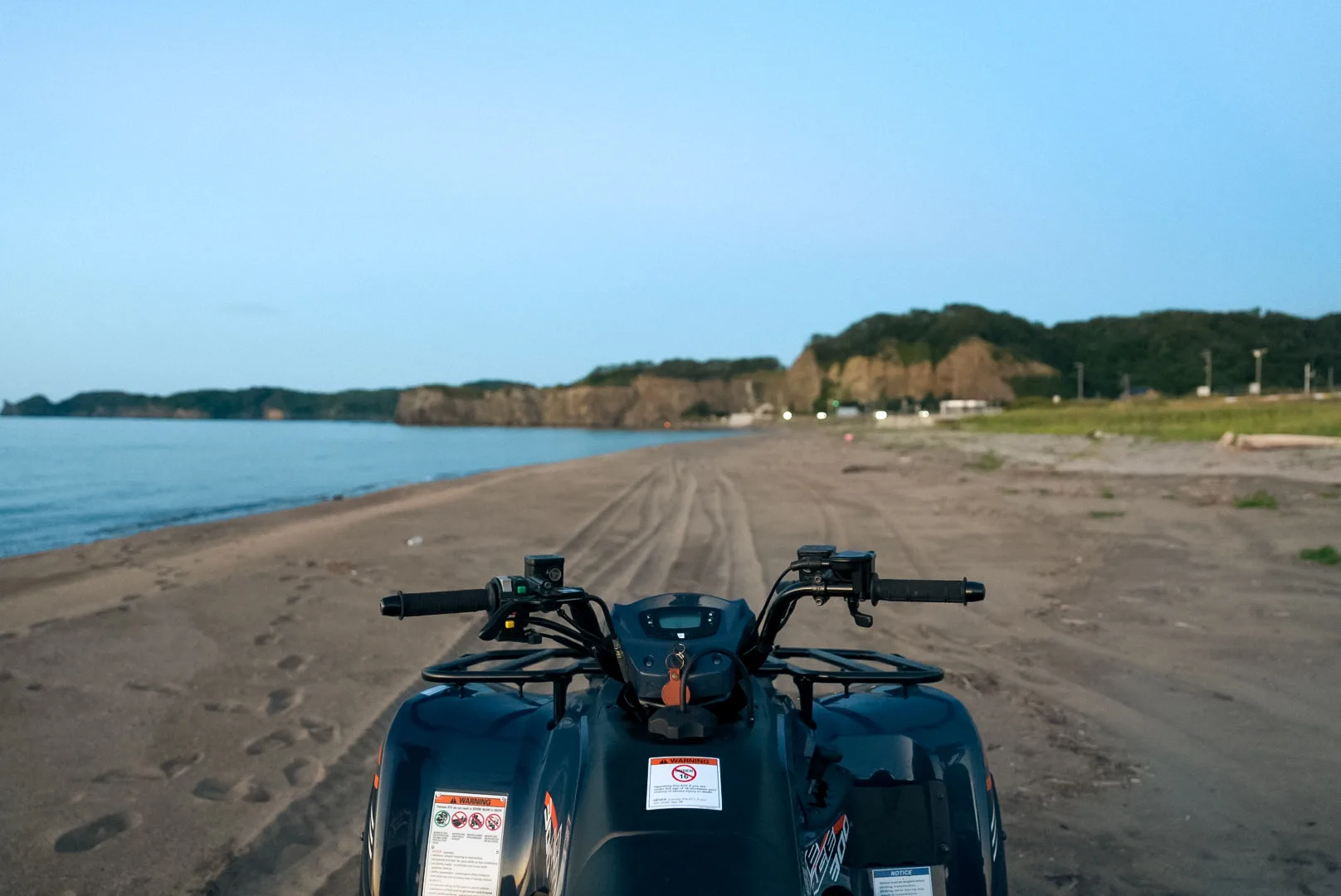
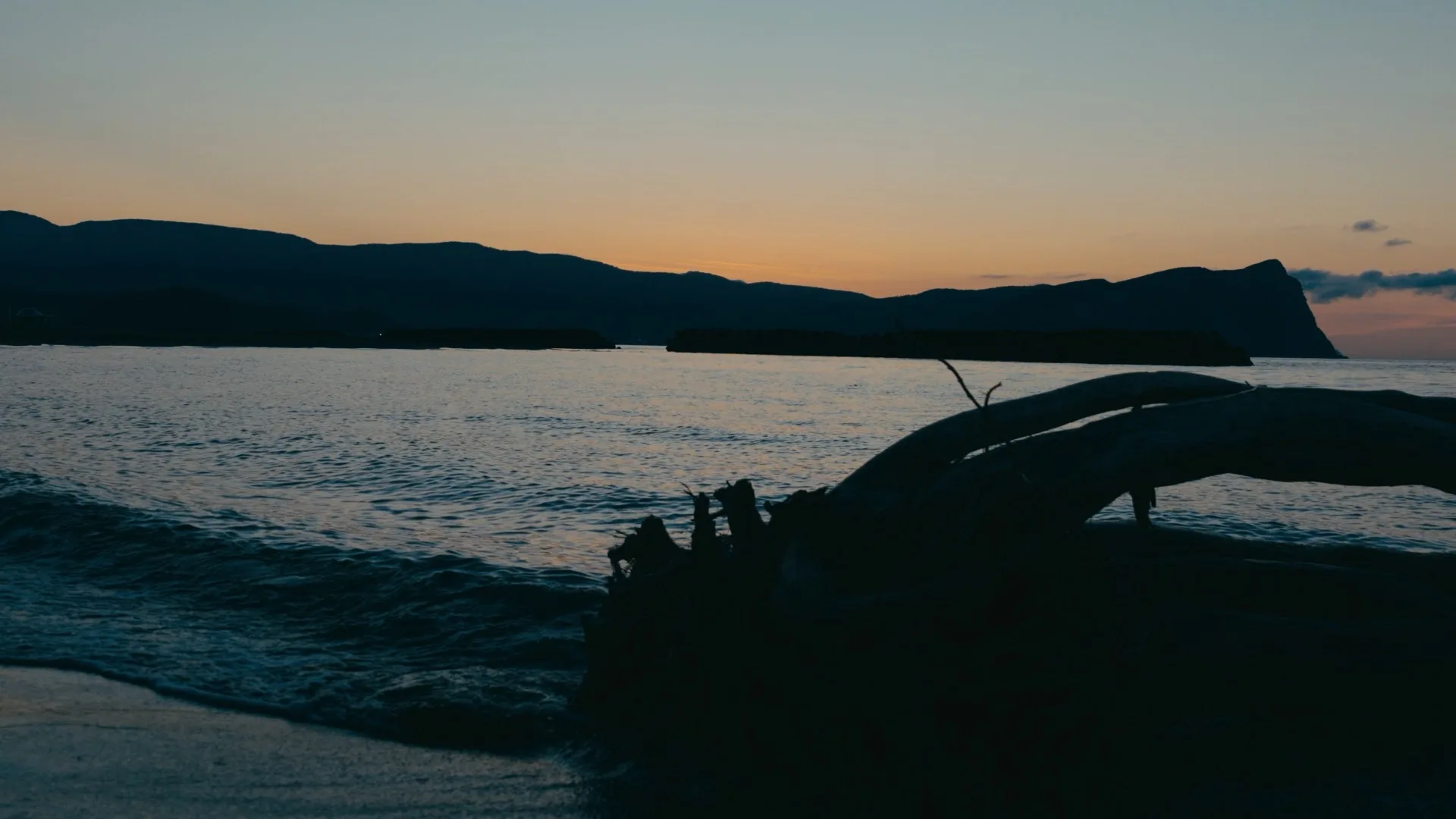
Yoichi is a whisky and wine town on the Sea of Japan, about an hour and a half by car from Sapporo. In the Yoichi edition, guests drive a buggy themselves along the beach to the tea room on the shore. After a cold plunge that jolts the body, they enter through the low doorway and receive tea from the host, facing the sea and the sunset beyond the window. Sixty minutes in the tea room, around two hours in all.
Rather than adding big devices, the core is to change how time feels through the body, in nature. The beach is reserved for one group a day, and the tea room opens in light rain and wind too. For food and stays, we partnered with Yoichi Dreams, which runs the hotel and restaurant LOOP and the winery-side KISIN, so guests can continue on.

Not a facility, but a rite of passage
What A-an makes is neither a beautiful tea room nor a facility for looking at scenery. You place your body before something too big for human scale, the sea, the dark, the cold, then enter the smallest of spaces and come back to a single bowl of tea. In that moment body, others and world are felt strongly again. We call that state a rite of passage for people today.
A tea room that needs no building can be taken to land whose use is not yet decided, or to breathtaking places where building is hard. The experience rewrites what that land means. Next, we open the tea room in the snow of a Niseko winter.
INFO
- Owner
- NISEKO INVESTMENTS LLC
- Location
- Niseko (winter) and Yoichi (summer to autumn), Hokkaido
- Dates
- From winter 2025 (Yoichi edition: September–November 2026)
SCOPE
- Business design
- Planning & communication design
CREDIT
- Owner
- NISEKO INVESTMENTS LLC
- Tea host
- Curtis Shin Holmes
- Integrated production
- NEWSKOOL LLC
- Spatial design
- Kaito Hayashi / Seita Kasahara / Mari Takahashi
- Creative
- Yuki Nakako
- Photography
- Seita Nakamura / Yuki Nakako
- Film
- Luna Goto / Akio Oda
- Music producers
- Curtis Shin Holmes / @mad_kosmos
- Recording engineers
- @phonkgee_ibuki / @rogersinme
- Model
- @hinata__hime
- Tearoom exterior design
- @makito_k533 / @madcatninja13 / @tokouki_0528 / @a.s0.314
- Support
- Yoichi Dreams Inc. (LOOP, KISIN) / Hakuhodo Kettle Inc.