CASE STUDY
demo!play NOODLE
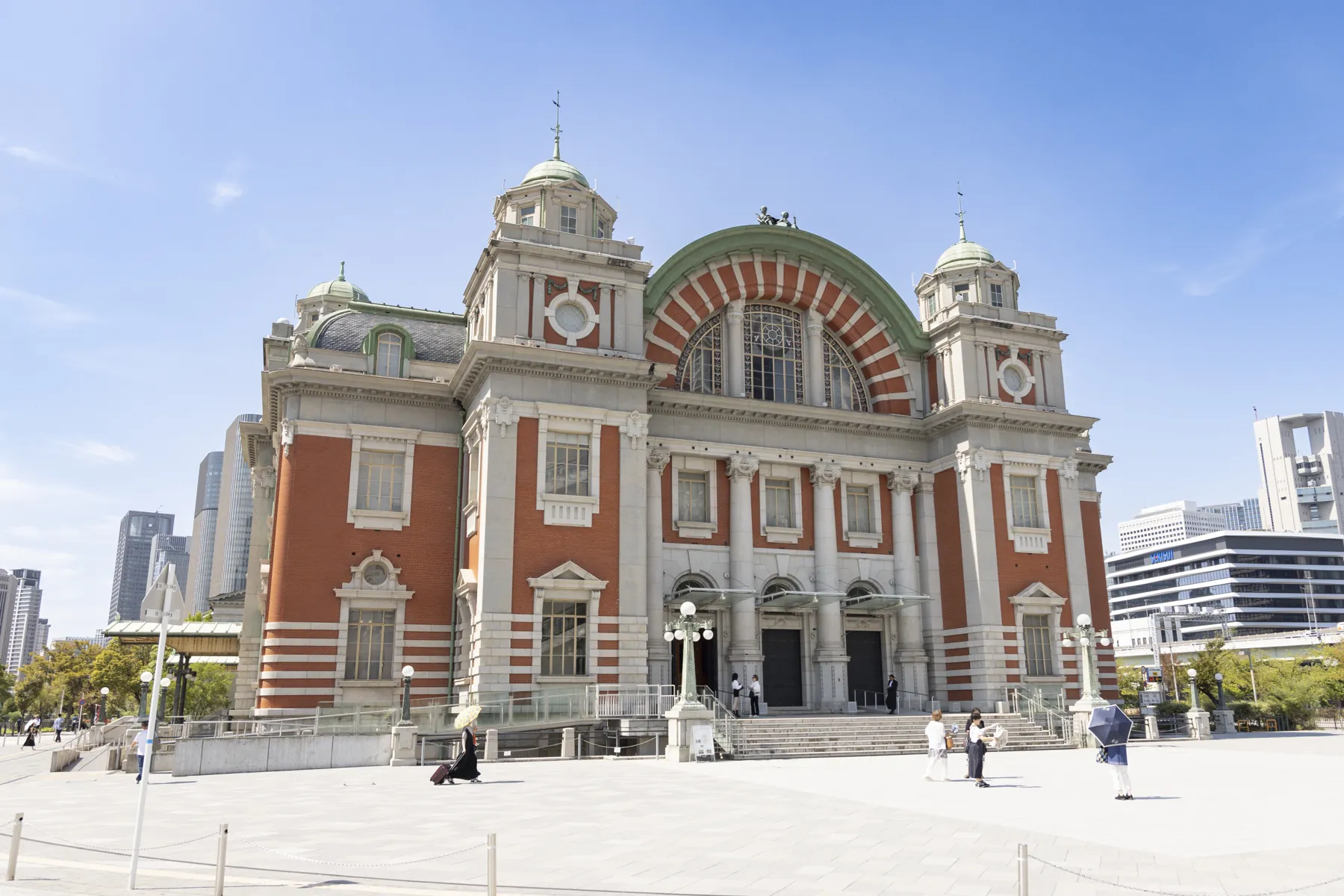
Osaka City Central Public Hall, Nakanoshima2025
Q.
After the Expo, what vision for Osaka is not a second-hand Tokyo?
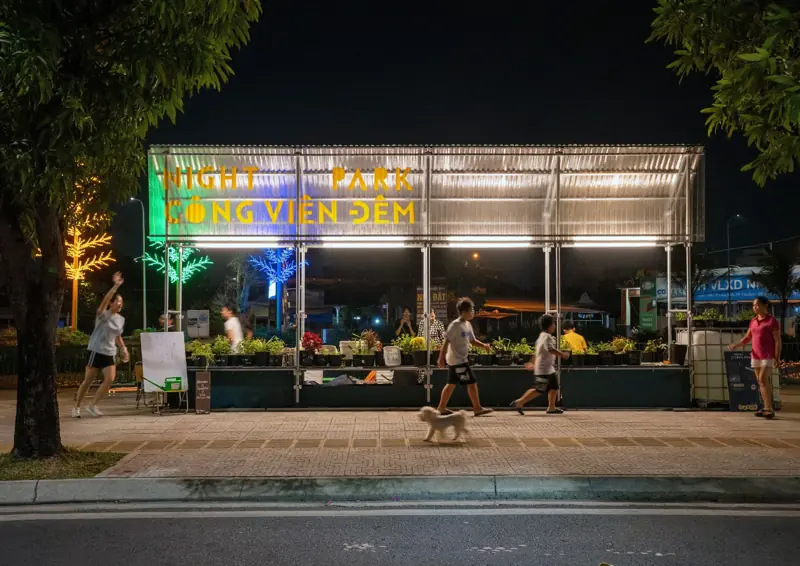
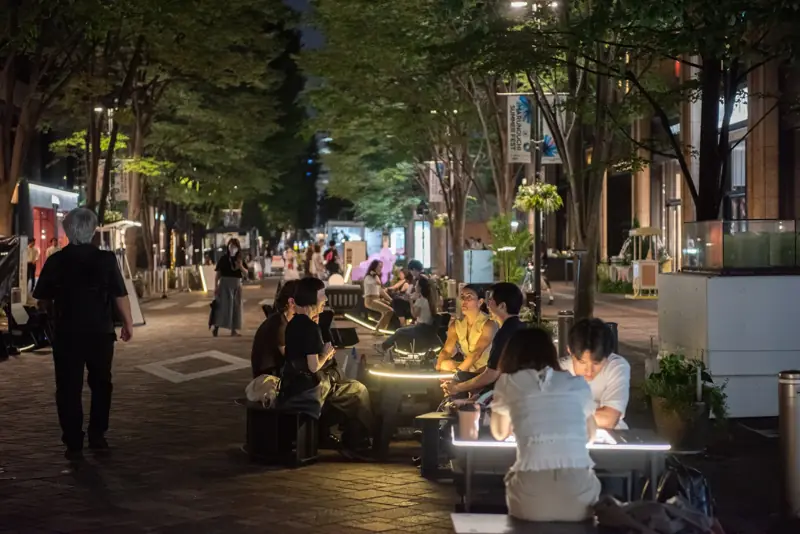
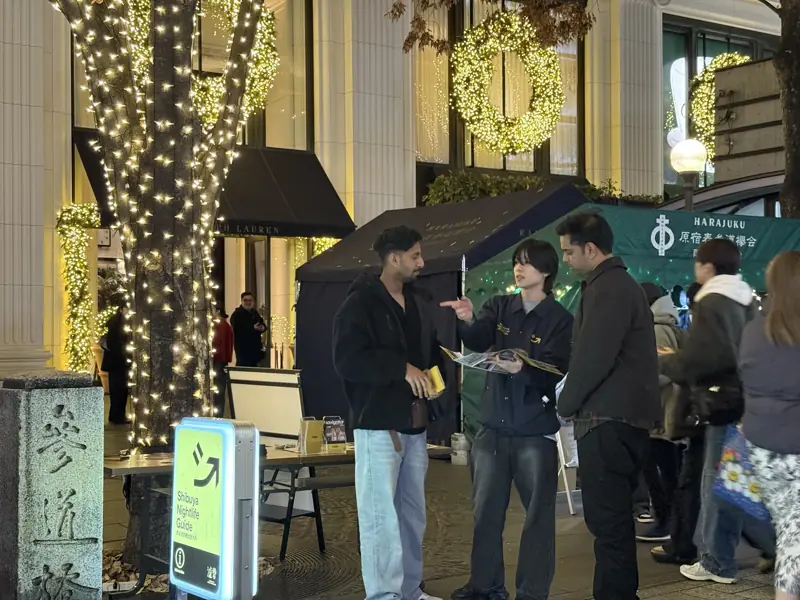
During Expo 2025 Osaka, Kansai, the association demoexpo (demo!expo) was running project after project that carried the Expo beyond its grounds. Under the banner of a Night Pavilion, it ran EXPO Sakaba, gatherings that spread across Japan, along with ideas such as turning Osaka Station into a dance floor after the last train. When NEWSKOOL joined the team, we argued that what mattered was not the Expo period but what Osaka should be after it: drawing that vision, building momentum towards it, and setting up practical projects with partners in Japan and abroad.
A.
A month before the Expo closed, we created an idea conference where 28 people from Japan and abroad discussed Osaka after the Expo.
Not the Expo period, but Osaka after it
The Expo brings together people who rarely share a room: government, business, creators and participants from overseas, all meeting in Osaka. But those encounters can unravel once it closes. Our aim was to use the Expo as an opportunity to co-create with a wide range of people in and outside Osaka, bring in overseas players in particular, and turn it all into projects that would continue after the closing.
So we decided to hold a summit one month before the Expo ended, to put forward proposals for the after-Expo city. Our aim: turn the open-innovation community that grew during the Expo into a co-creation business model lasting until 2030. The conference was a place to present, and to match people for their next projects.
Not a second Tokyo, but an idea city
What we pictured was not a city chasing economic capitals like Tokyo or New York. In Barcelona, Los Angeles, Milan, Montreal and Melbourne, each country's cheerful second city, bottom-up city-making driven by citizens and creators is under way, and night culture and tourism enrich both the economy and everyday life. In Asia, too, cities such as Chiang Mai and Ho Chi Minh City share that temperament.
Osaka is also a bottom-up city, shaped by merchant culture and a hands-on spirit. A city full of ideas, where people gather and do unprecedented things one after another in the spirit of “just give it a go”. A city that values warmth, humour and local culture, and combines a tangible everyday life with tolerance for trying things. We called this Idea City Osaka, and set out three words for how the world might see it: playful experimentation, inclusive hospitality, and local is global — the more Osaka is itself, the more interesting it is to the world. The night is one of the ways into that idea city.
One month before the close: seven hours at the Central Public Hall
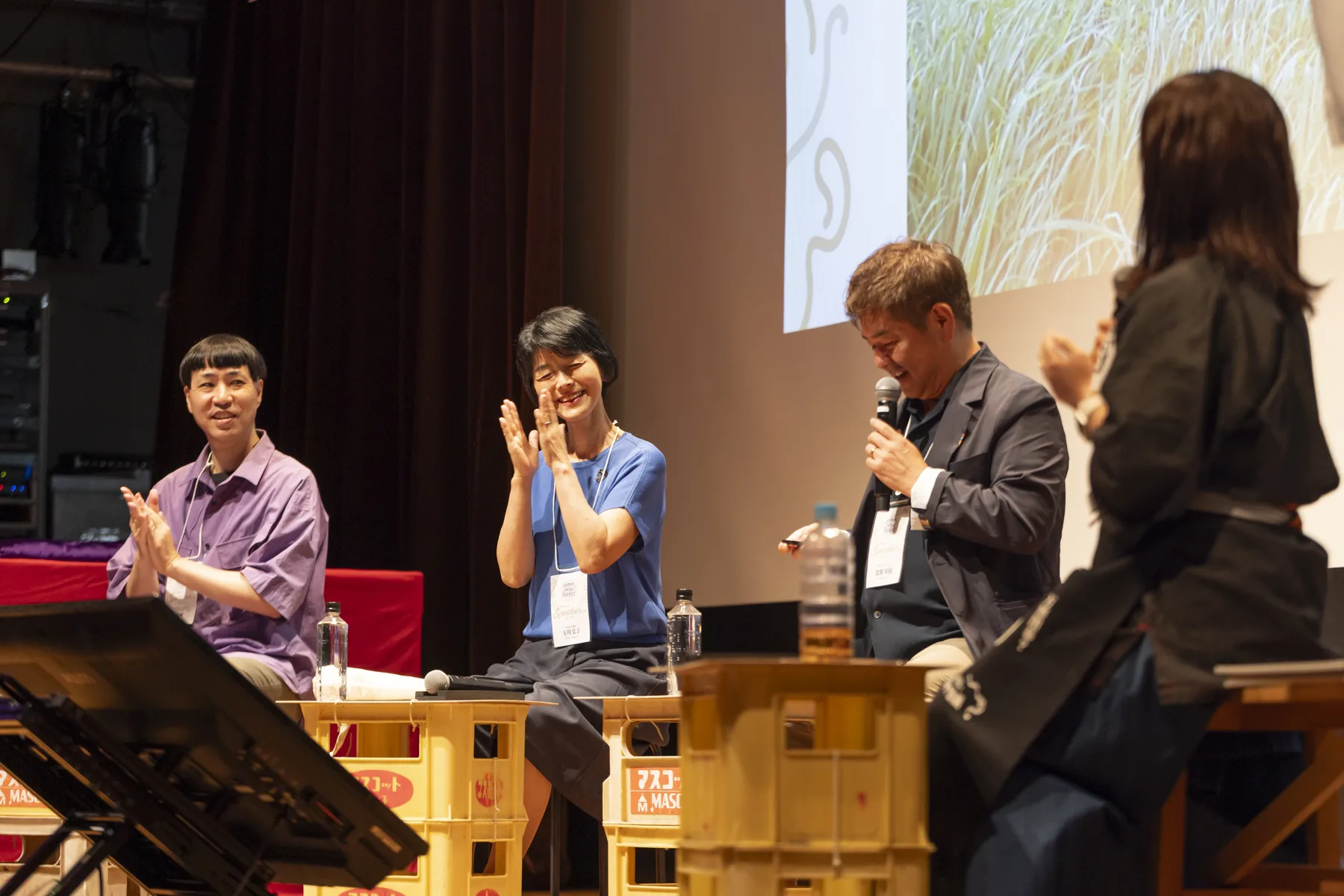
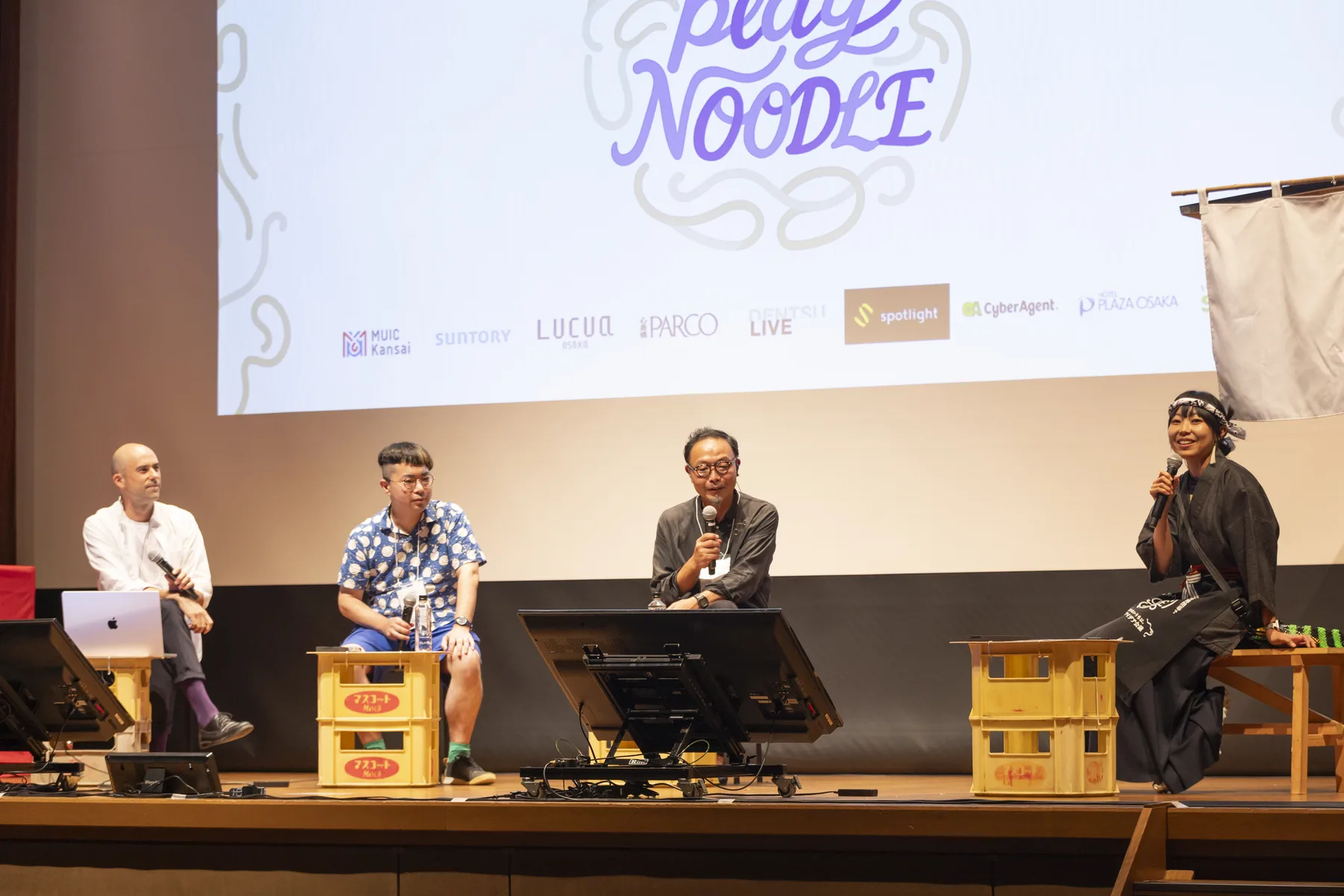
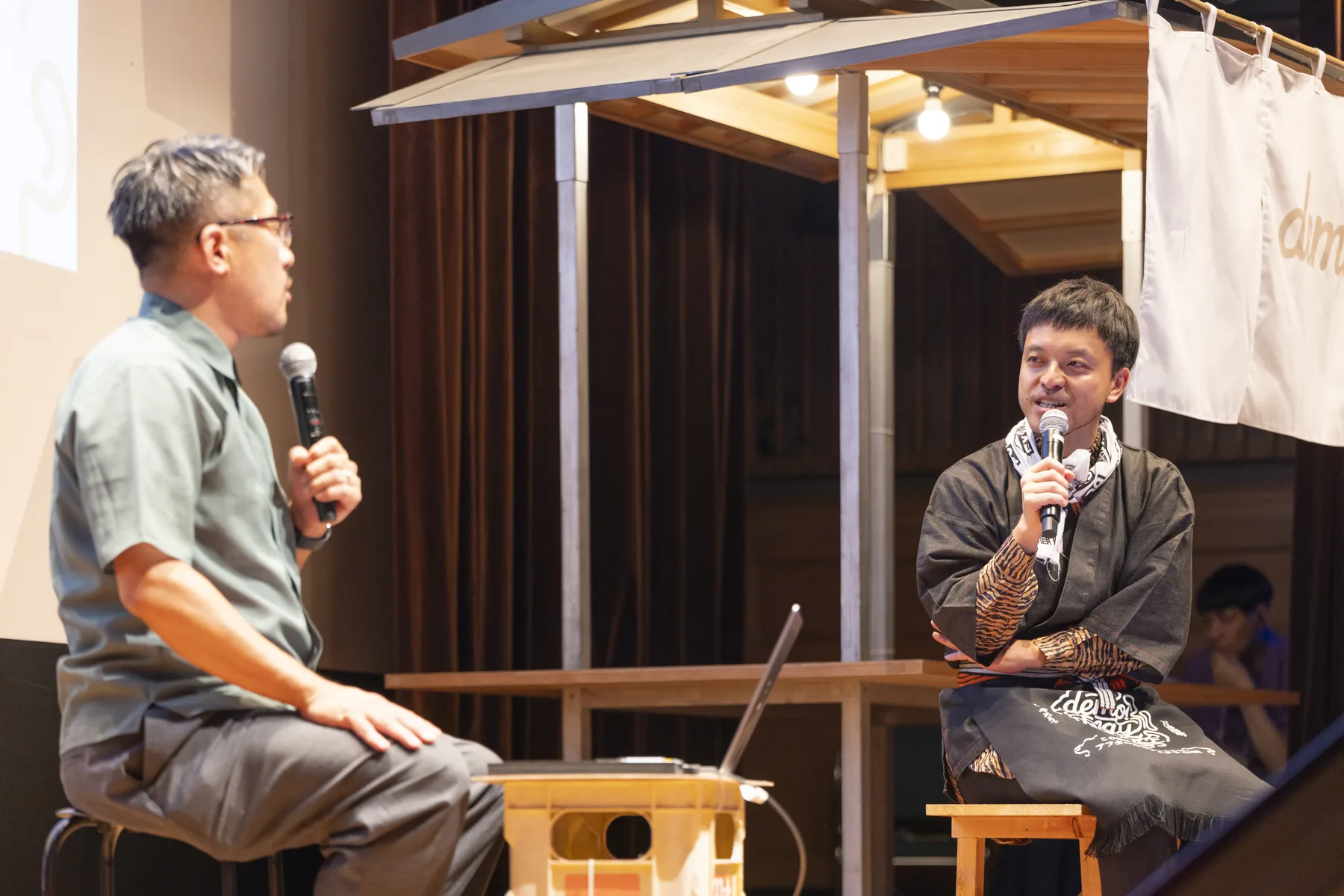
The after-Expo idea conference demo!play NOODLE took place on 16 September 2025 at Osaka City Central Public Hall. With Hanaoka of demo!expo as general producer, NEWSKOOL handled the planning and production, speaker casting, session design and securing the budget. The co-organizer was the Osaka Machigoto Expo co-creation platform, including the Osaka Chamber of Commerce and Industry and the Osaka prefectural and city Expo promotion bureaus.
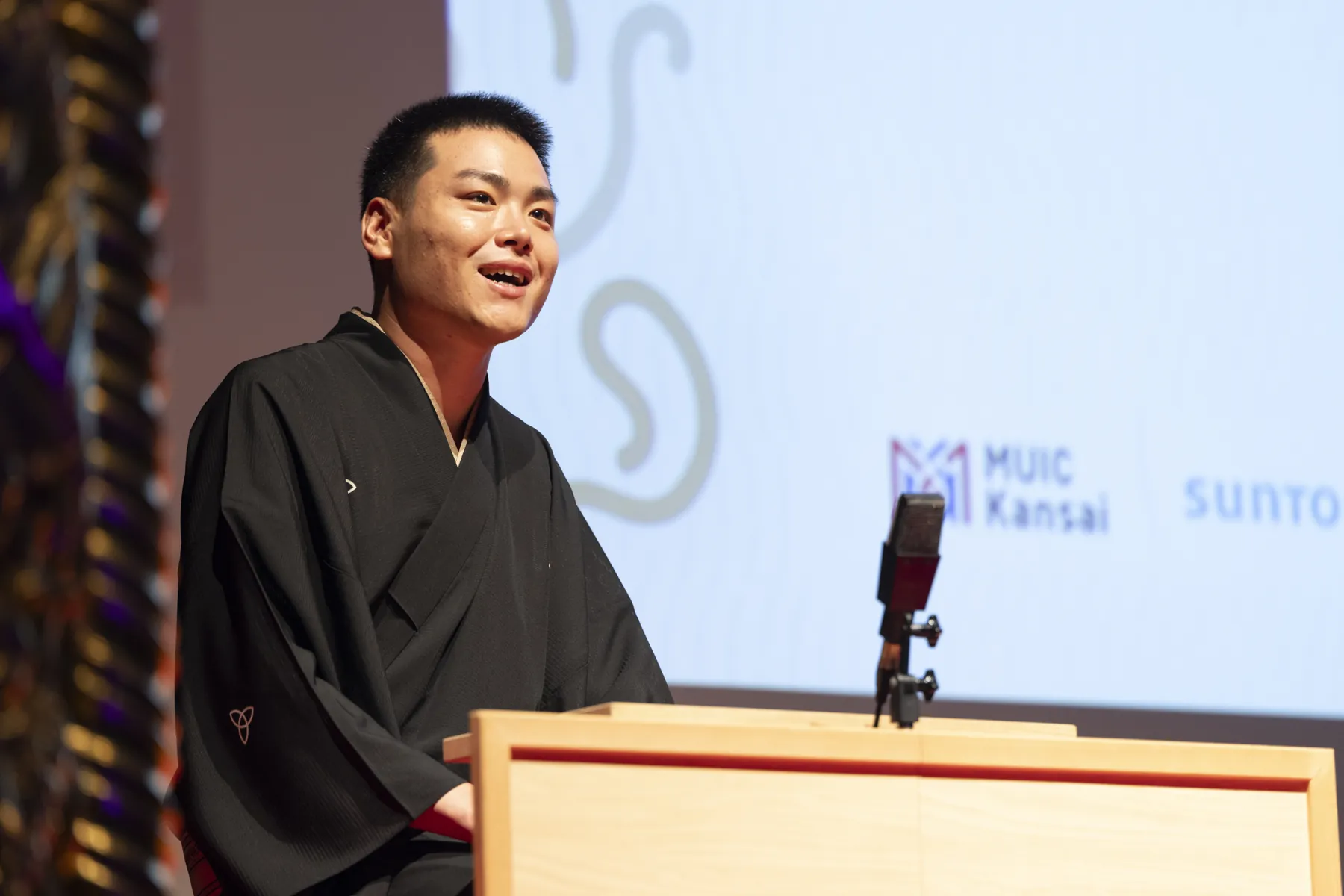
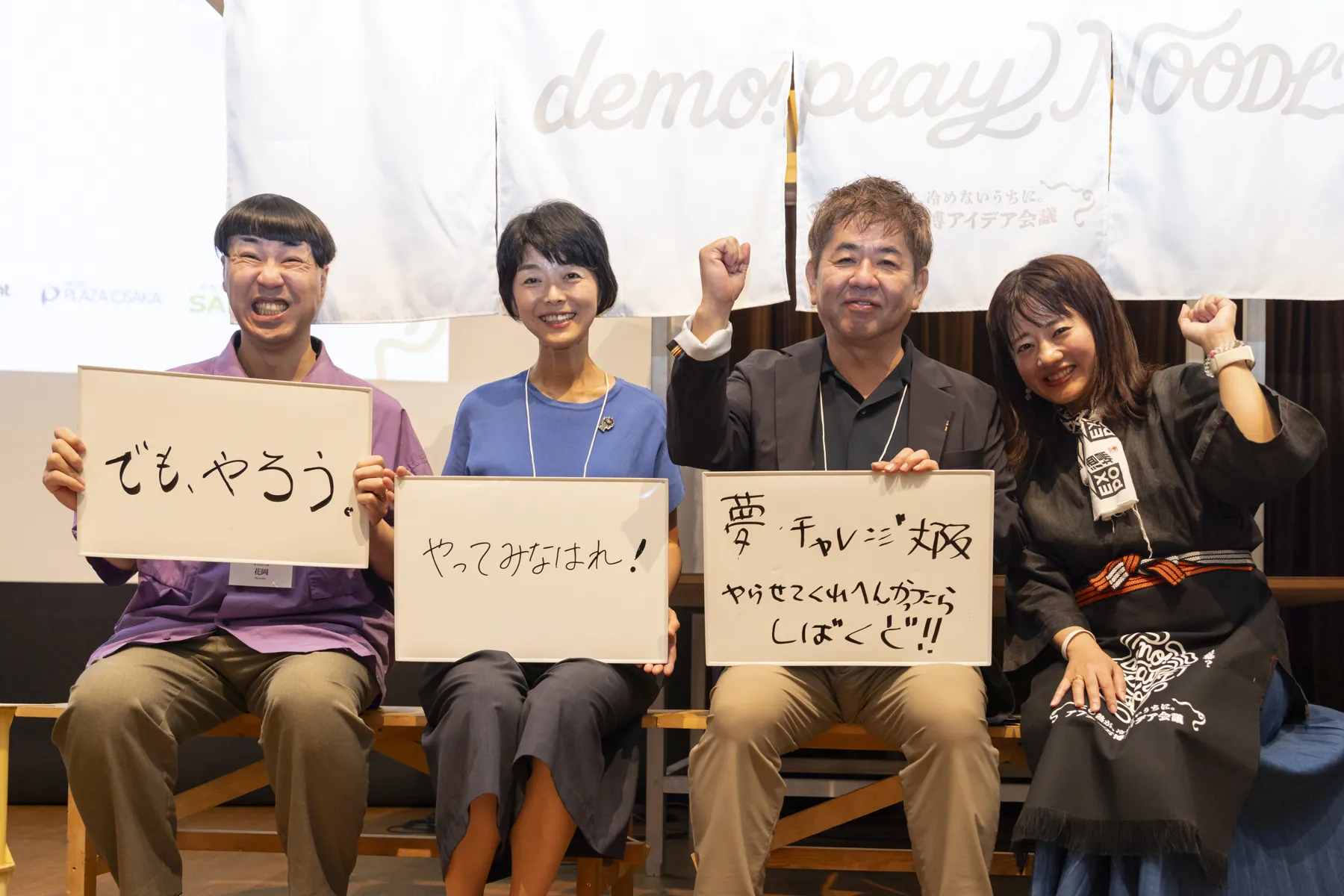
The theme was “Making Osaka an idea city the world can be proud of”. It opened with the kamigata rakugo story Toki Udon. The opening session talked about backing Osakan challenges in the spirit of “just give it a go”, keeping the energy alive through small, continuing projects rather than relying on big events, and how showing by doing is the soil that makes a city last.
Bringing practitioners from other cities into Osaka's conversation
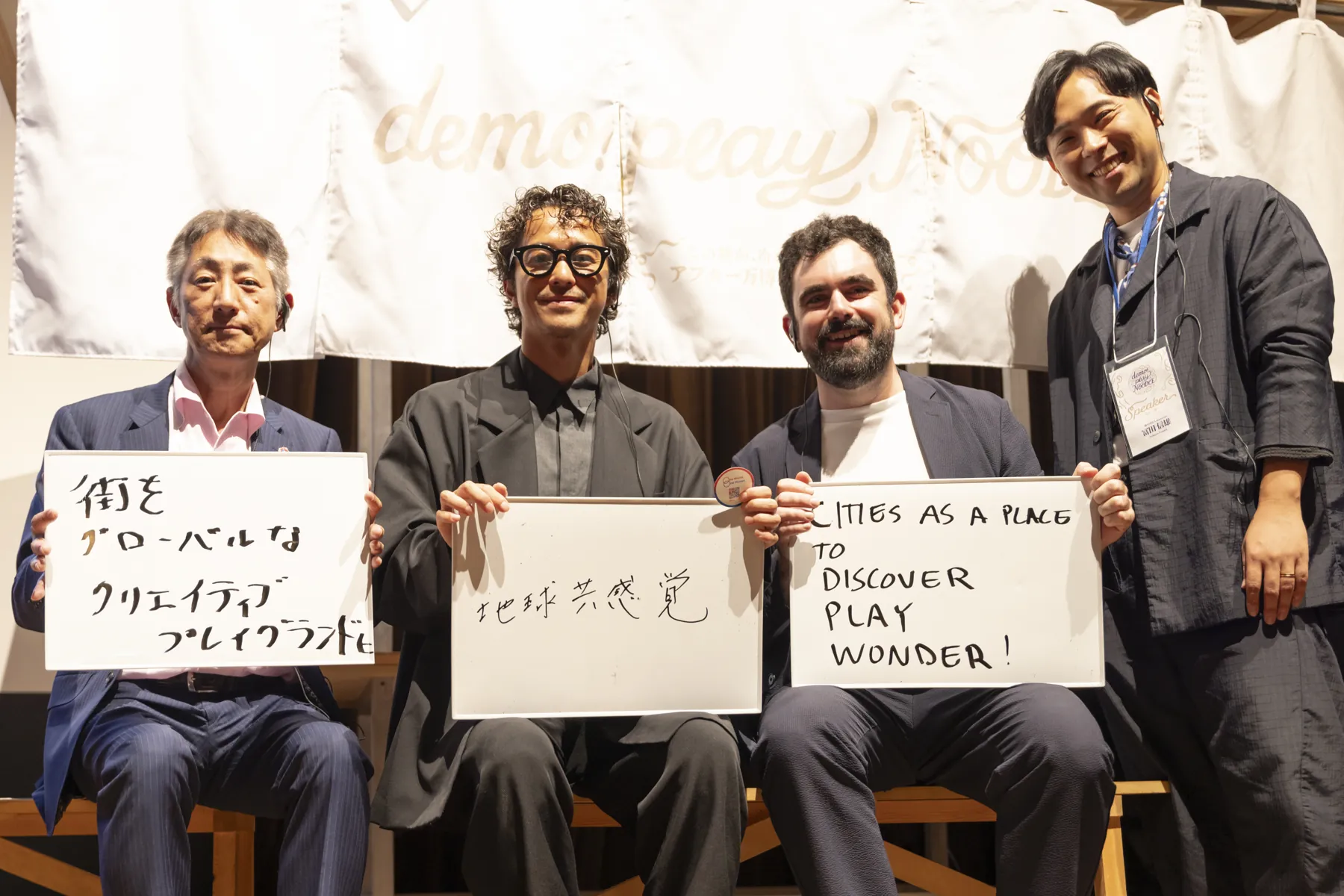
Twenty-eight people spoke and moderated. Alongside Osaka's government, business associations, railway companies, developers and creators, we invited people with hands-on experience in cities abroad: VibeLab from Berlin, Montreal's Quartier des Spectacles cultural district and the creative studio Mirari, Chiang Mai in Thailand, and Rice, a branding company in Vietnam: both practitioners who have moved cities through culture and people who have turned it into policy inside government.
Every session set the experience of a city abroad alongside Osaka's own practice, so that the connections made at the Expo could grow into projects with cities overseas.
A big goal, and small goals
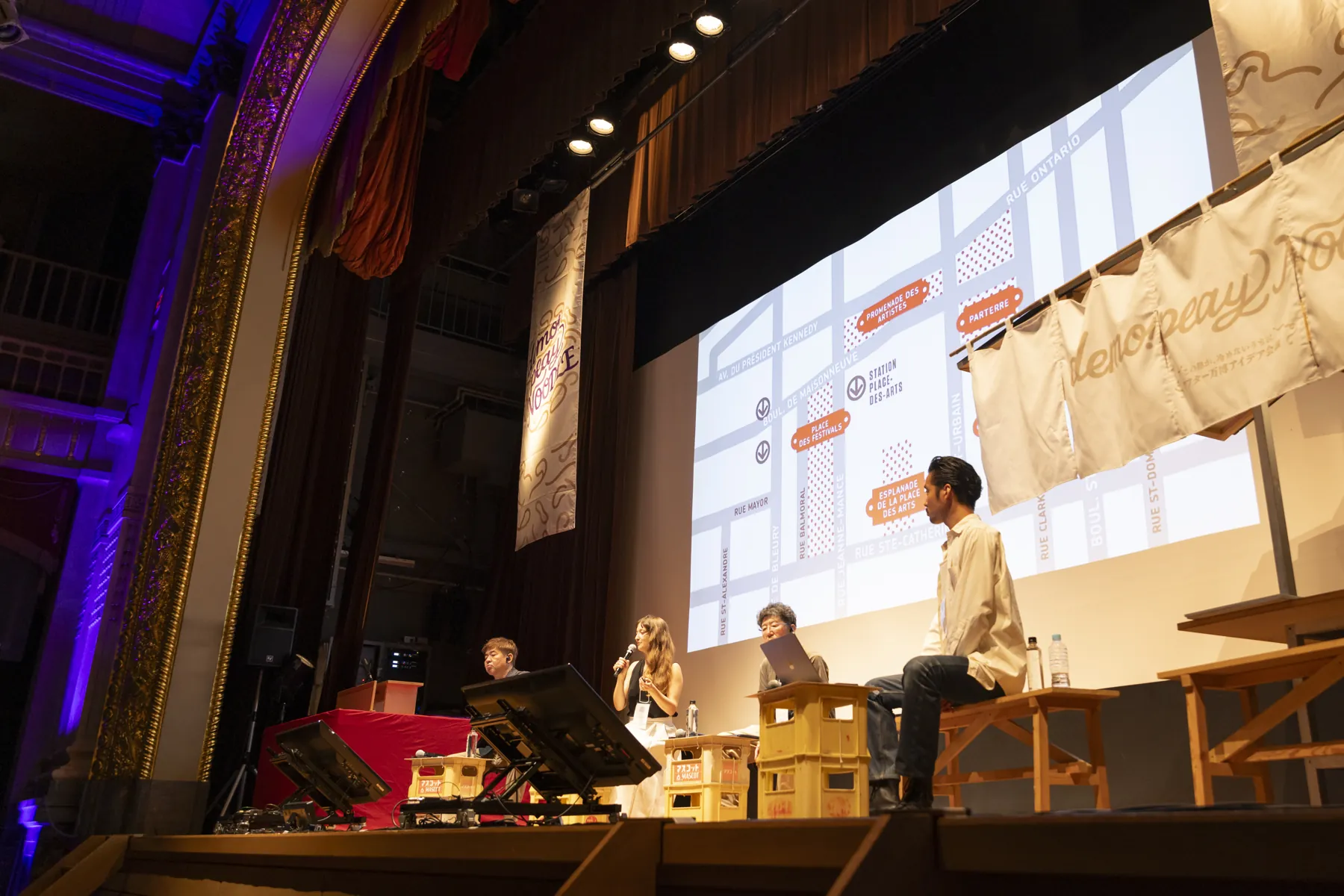
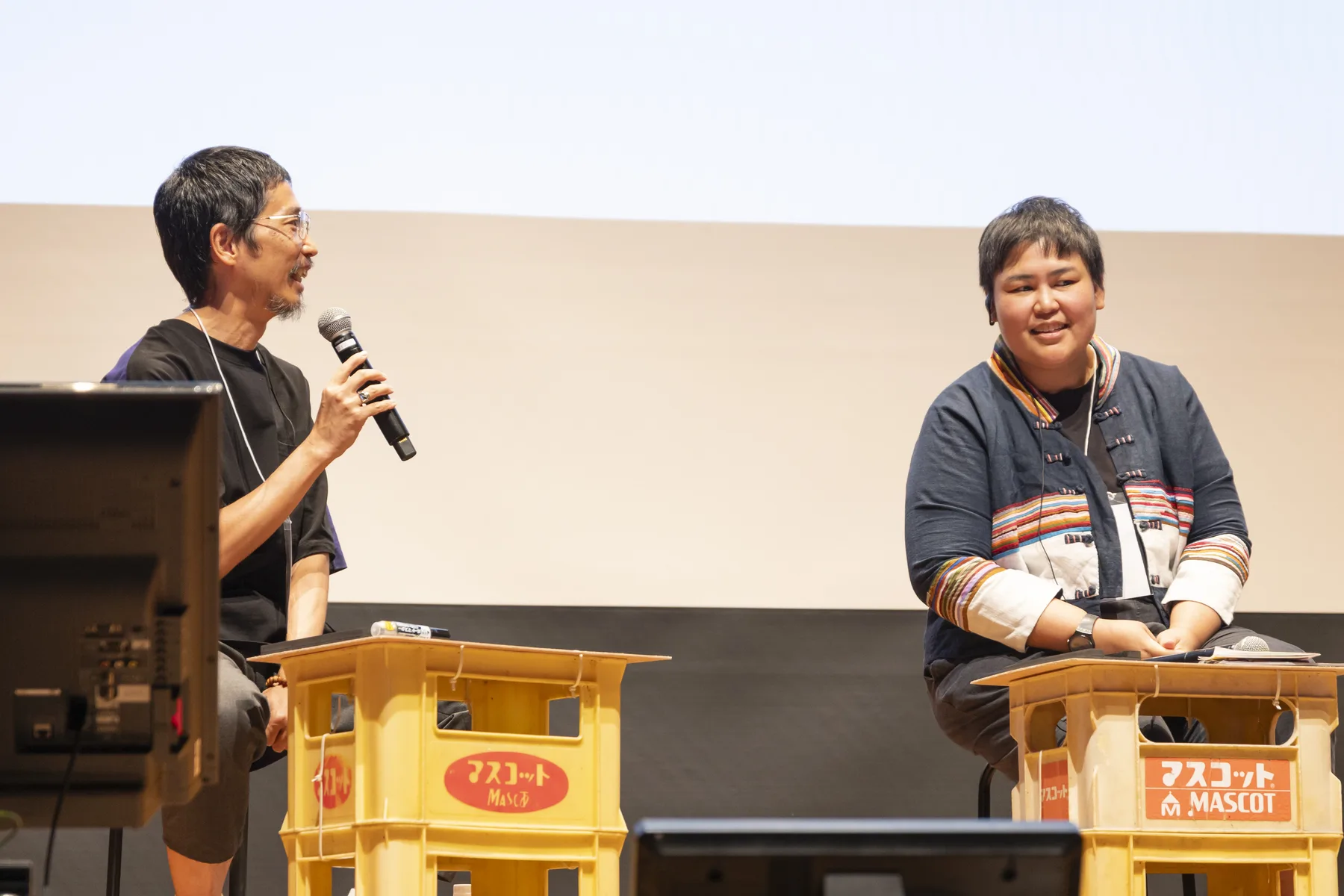
The first session compared EXPO Sakaba with Chiang Mai, Thailand's second city. Imhathai Kunjina of the Creative Economy Agency in Chiang Mai, who has supported local creators through Chiang Mai Design Week and more, said bottom-up work needs “small goals” alongside the big one. When each citizen acts for themselves, the city becomes attractive, and that accumulation makes a better city.
EXPO Sakaba began as gatherings of people interested in the Expo and grew into bases at LUCUA Osaka (Kita) and Shinsaibashi PARCO (Minami) during the Expo. Three reasons were given for its success: opening up public space, starting without being asked, and connecting parts of the city. Linking Kita and Minami got people and culture moving between them.
At the heart of the night: culture, not alcohol
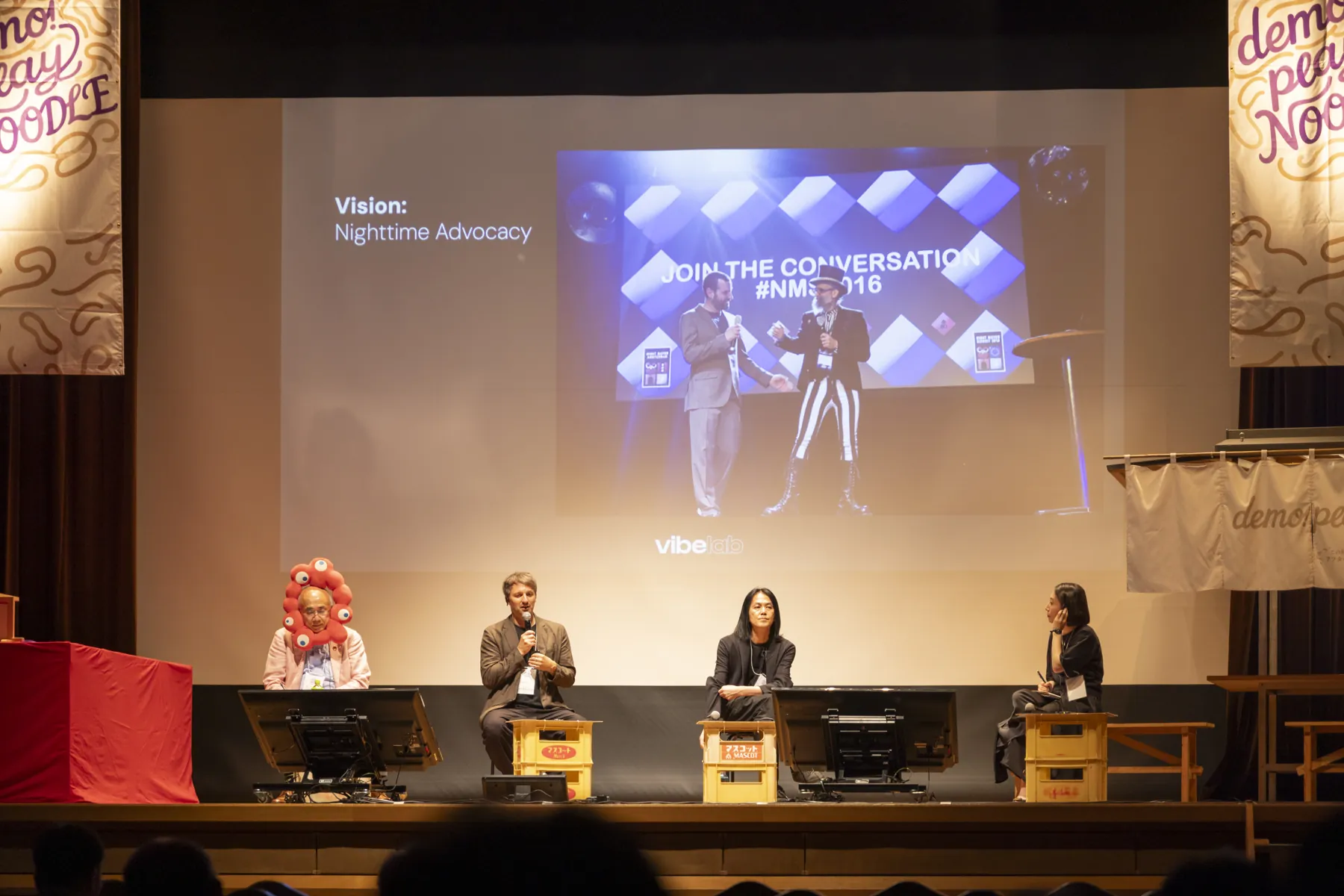
In the nighttime economy session we set three questions: who the night is for (visitors, residents, night workers), what foundations the city should provide, and what makes a good night beyond sales alone.
Lutz Leichsenring of VibeLab, which has supported night policy in cities around the world, said nightlife should centre on culture, not alcohol, and set out six stages for growing the night: inspiration, vision, assessment, governance, action plan and education. Atmosphere cannot be bought; it needs creative communities and affordable spaces. Osaka's night, he said, has a welcoming temperament, with room for a nightlife of its own. Hiroyuki Fushitani of Time Out Tokyo noted that Japan's image of the night is still tied to nostalgia for the bubble era: the night adds options to people's lives, and should not stop at illuminations but extend to systems for inclusion. Hiroshi Mizohata of the Osaka Convention & Tourism Bureau said the biggest crisis is a shortage of people; without becoming a city that embraces diversity Osaka cannot be a hub for Asia, and the pay and social standing of night workers must rise.
Do it first, then earn trust with data
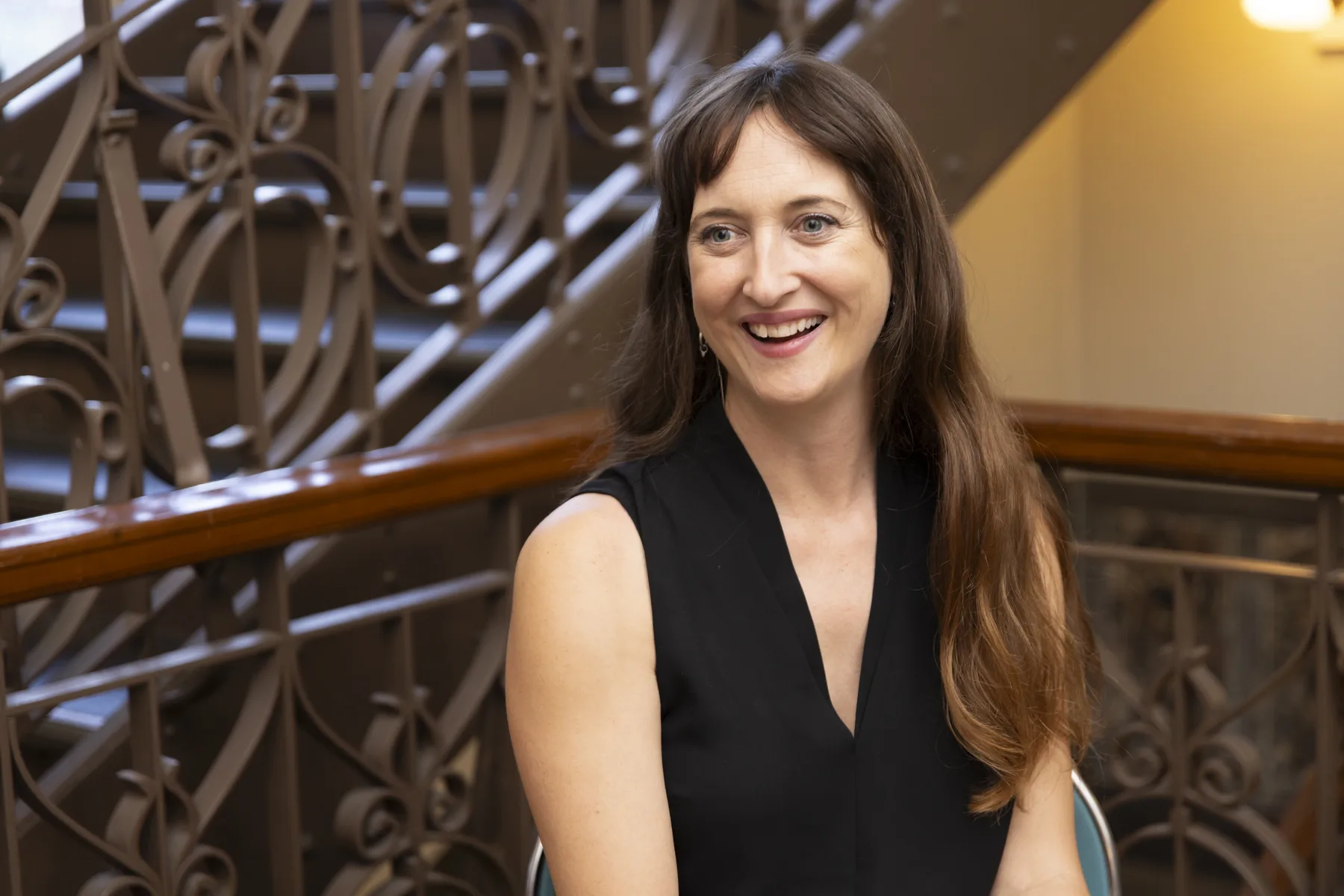
The public-space session, “From Namba Hiroba to Midosuji: how to build a zone where you're allowed to play”, featured Jacqueline West of Montreal's Quartier des Spectacles. In roughly one square kilometre, 80 venues host more than 1,000 events and over 50 festivals a year; cultural programmes are free, and the district works as a public platform. Through dialogue with residents it reads needs by time of day, coffee in the morning, jazz in the evening, and designs programmes around them. Reaching agreement with government and rights holders takes trust and flexibility: rather than sticking to yearly or monthly frames, run a six-month trial, collect data and earn trust through reports. Work with universities and you can even measure the wellbeing that art and culture bring. Turn creators' “I want to” into something visitors and investors “want to support”, and expression connects with urban design and the economy.
Hiroki Kutsuna, who worked on Namba Hiroba, said that precisely because regulation in Japan is strict, you have to do it first and show there is no problem. Terada of Nankai Electric Railway added that a railway company is not the commander of city-making but a stagehand, and that city-making should start from the software.
Technology is not the goal, but a tool for gathering people
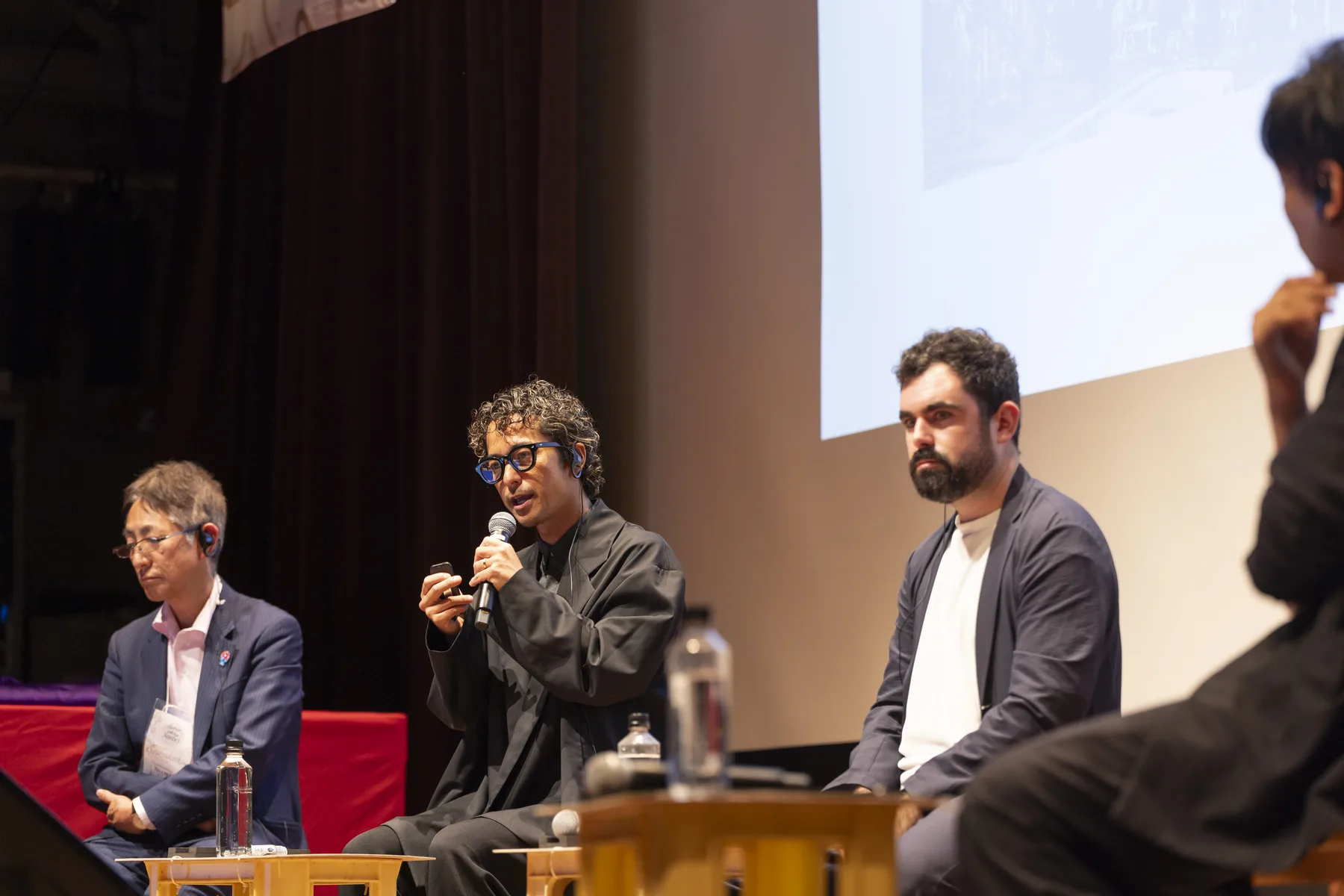
In the session on bringing the Expo's lessons into the city, Thomas Payette of Mirari, creative director of the Canada Pavilion, said technology is a tool for conveying stories and emotions and for making spaces where people gather, not the goal. Ideally the technology is invisible, and meaning stays with you after a natural experience.
Taniguchi of Hankyu Hanshin Properties, who works on Umeda's development including Grand Green Osaka, said Japan should build a global creative playground, and revealed a plan to adapt the Canada Pavilion's technology to stage Umeda at night. Kenji Kohashi, who produced events at the Expo, called the Expo a catalyst for awareness: if awareness turns into action, the city can change. The session closed with Thomas's words: the city of the future is a place to discover, play and wonder.
Osaka is OPEN
In the session on what makes Osaka's creativity Osakan, Josh Breidenbach of Rice, who has localised brands such as Apple and Uniqlo for Vietnam, said that on his first visit he noticed how much of the design, starting with the Grand Ring, takes the shape of an “O”. Linking that to the city's generosity in welcoming people from every country, he proposed the tagline “Osaka is OPEN”. Shigeki Hattori of graf responded that brands people love come from not missing small voices that numbers cannot measure, and Shiboru Yamane said that turning frustration and anger with the status quo into energy produces honest, powerful creative work. The debate over how to unpack “OPEN” ran hot until time ran out.
The session on inbound travel shared that young travellers from Asia want different things country by country, and that for visitors from Europe, North America and Australia, Osaka's closeness between people and its readiness to talk are attractions in themselves.
The Expo ends, and things carry on
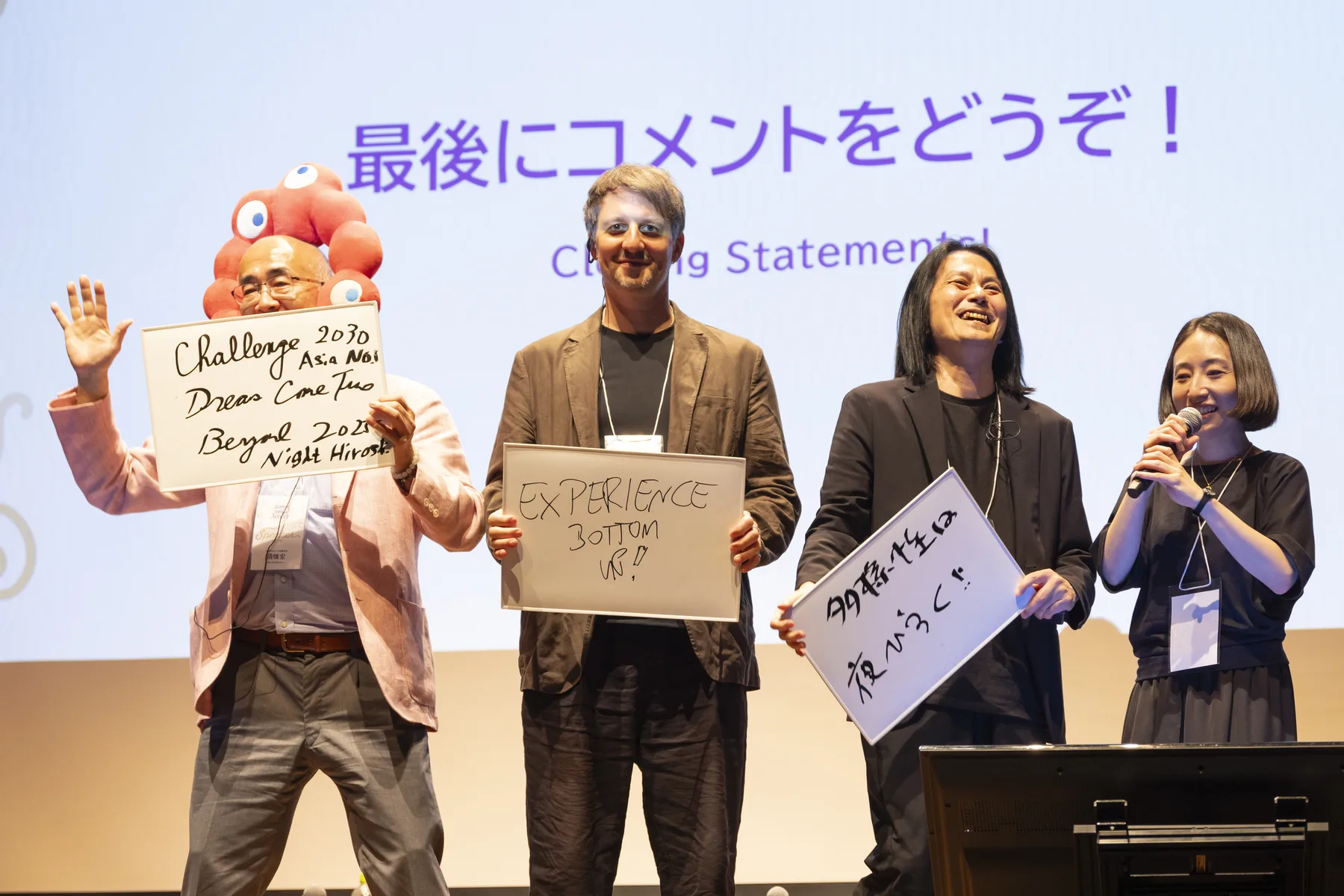
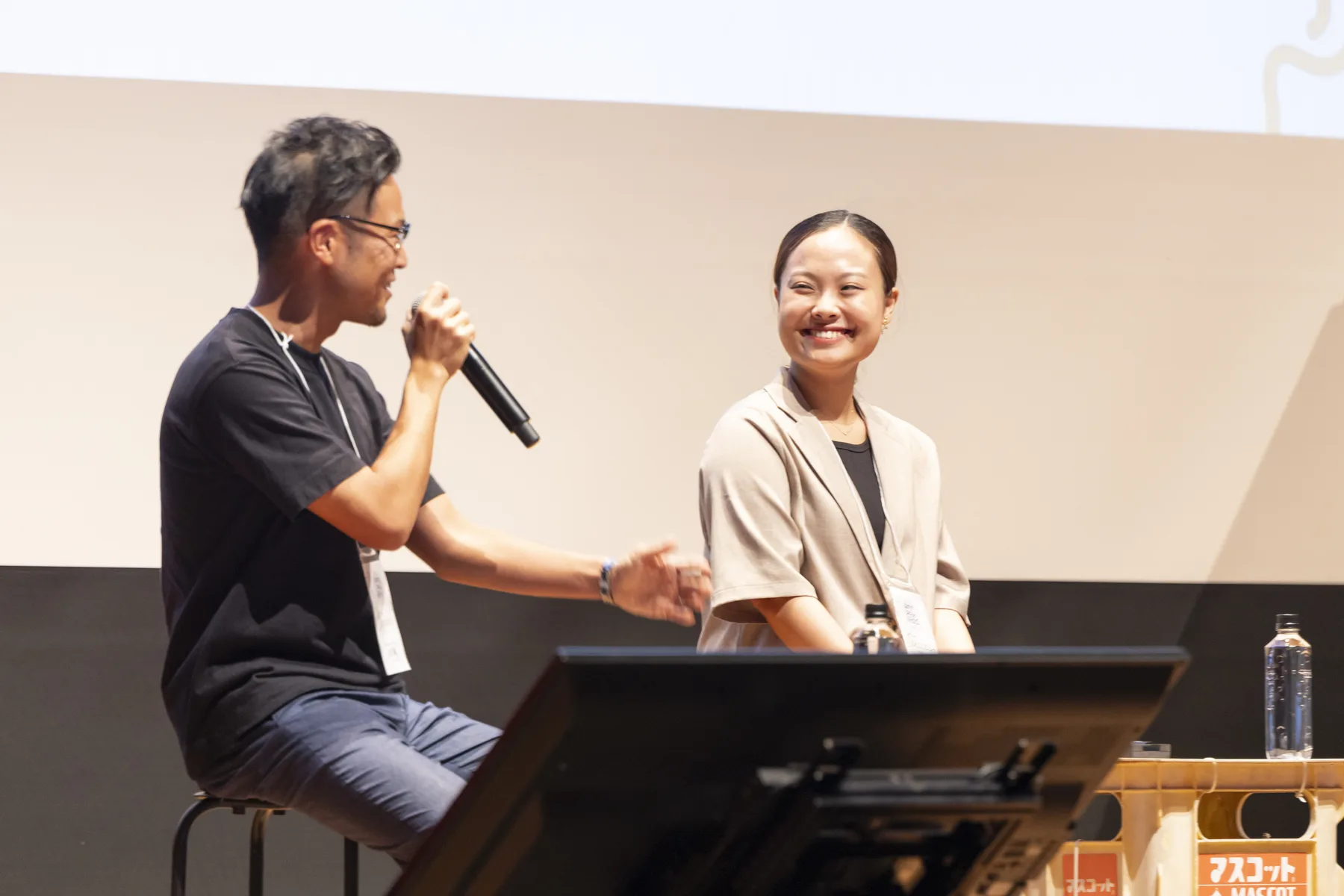
At the closing, Seiichi Saito, who led the Expo's co-creation programme, said the Expo has an A side, the good parts, and a B side, the raw reality: the A side is what we remember, but the B side is what we should record. The Expo is not a place to show finished products but a place where debate and challenge appear as works in progress, and its legacy lies in running many different actions side by side. Finally Hanaoka revealed that “noodle” is English slang for the brain, and closed by saying that if Yumeshima was a testing ground for the society of the future, the city of Osaka is the place where you can test things by the shortest route.
Expo 2025 Osaka, Kansai became a social phenomenon, with around 25.58 million general visitors. Since it closed, its energy has carried on in new forms. Part of the Grand Ring is to be kept; a pavilion has reopened as a permanent venue in another city; creators who worked on the site design have set up an organisation for co-creation. Some see the creator's role as having widened from making finished works to designing the conditions for many people to take part in creating. The connections between companies, creators and local governments made through the Expo are driving their next projects. With many projects intricately intertwined, Osaka keeps changing.
INFO
- Host
- demoexpo
- Location
- Osaka City Central Public Hall, Nakanoshima
- Date
- 16 September 2025
SCOPE
- Business design
- Planning & communication design
CREDIT
- Host
- demoexpo
- Co-organizer
- Osaka Machigoto Expo co-creation platform (Osaka Chamber of Commerce and Industry, Osaka Prefecture & City Expo Promotion Bureau, Kansai Economic Federation, Kansai Association of Corporate Executives)
- General producer
- Hanaoka (demo!expo / Ningen Inc.)
- Planning & production
- NEWSKOOL LLC
- Photography
- Kenji Ushikubo