CASE STUDY
NightPark Saigon Season 1
Vinhomes Grand Park, Ho Chi Minh City2025–2026
Q.
What makes a township strong for life after people come home?
Housing development in Vietnam has grown from homes alone into large townships that bring together shops, schools and parks. At Vinhomes Grand Park in eastern Ho Chi Minh City, the shared ground is full of clearly defined amenities: dinosaur statues, playgrounds, pools. They are easy to understand, but they leave little room for residents to invent their own uses or to change how they spend time with the seasons and as their families grow. As more people head outdoors after dusk to escape the heat, could we put into words a value of “living well at night” that goes beyond security? This was research by doing, begun with Nomura Real Estate Vietnam.
A.
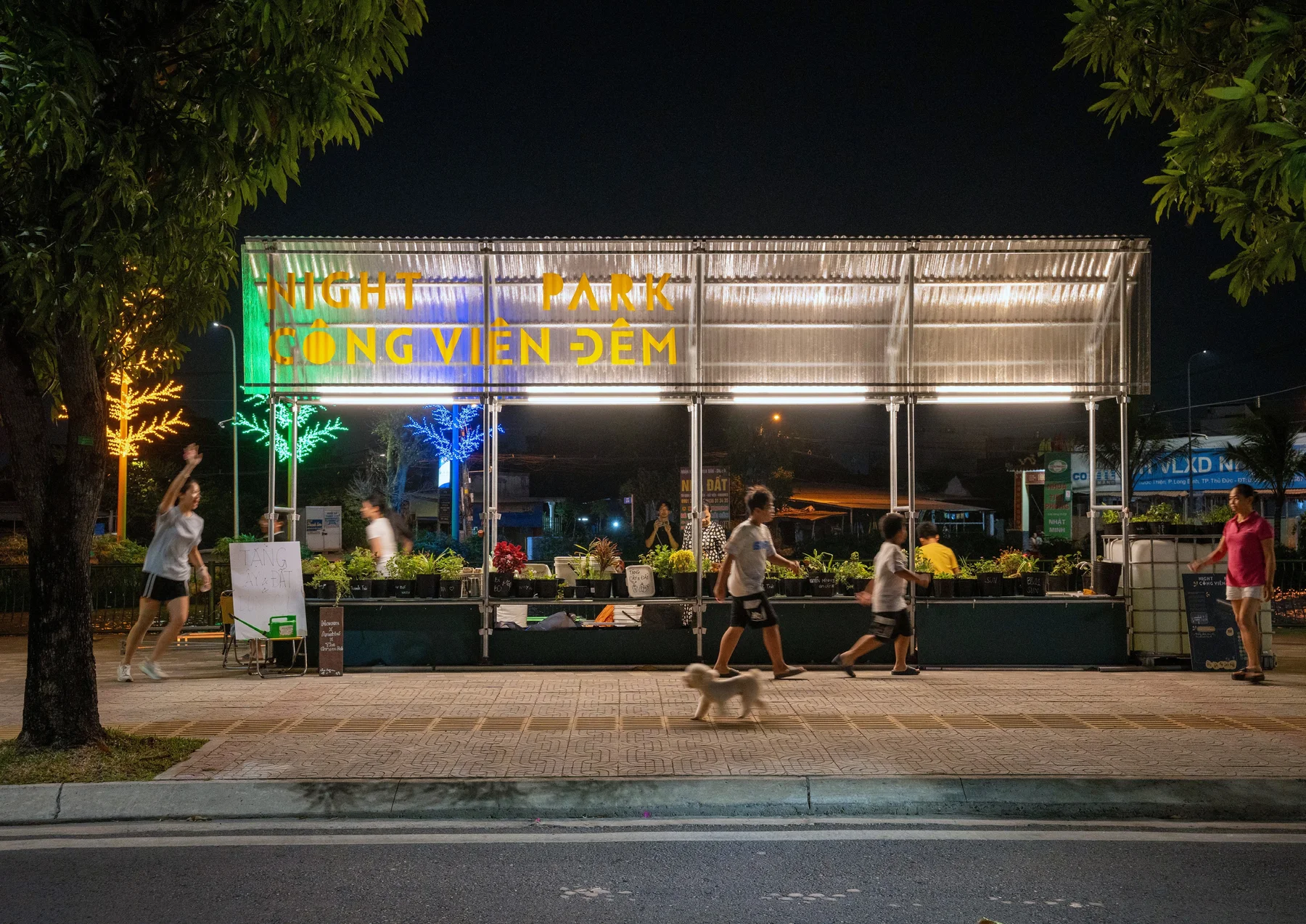
We set up a temporary “space to drop by”, without a fixed use, at the foot of the township's towers, and grew it with residents over seven weeks.
Programmed experiences, and open-ended space
Amenities with fixed uses are easy to manage and easy to explain when selling homes. But on their own they leave residents no room to update their lives for themselves. We believed both were needed: programmed experiences, and open-ended space residents can edit.
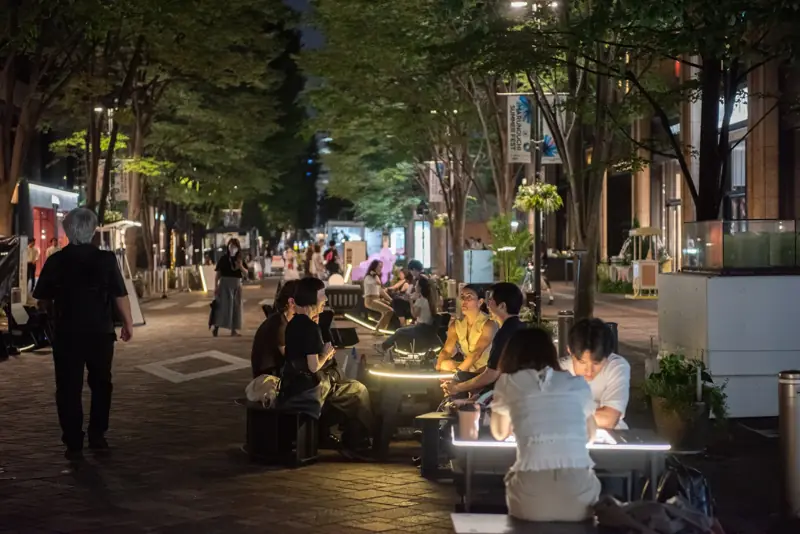
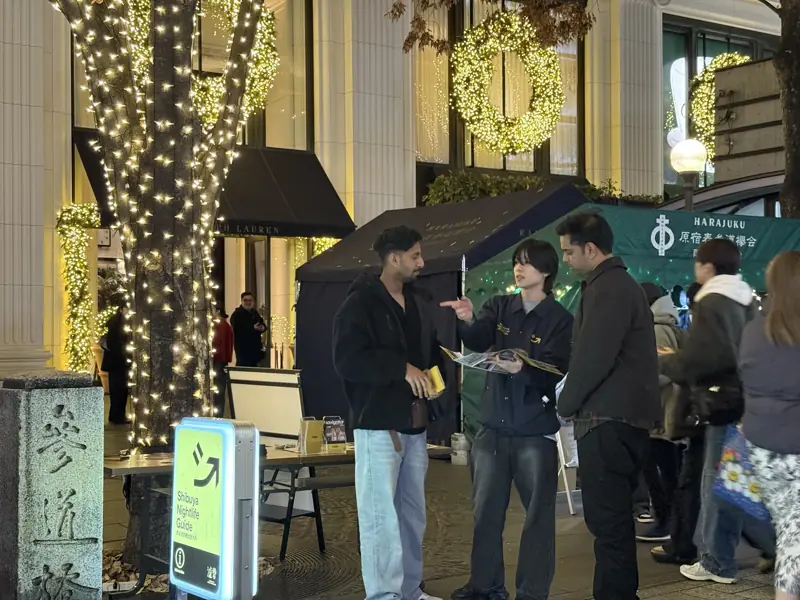
Night-time initiatives in Japan tend to centre on station areas and commercial districts, tied to footfall and spending. Here the stage was the ground floor of a residential township, and the question was how night-time public space gets used as an extension of daily life in the hour after people come home and before they settle in. It was also an attempt to bring NightPark, developed in Japan, into a residential district in Ho Chi Minh City.
No finished form: watch, then add
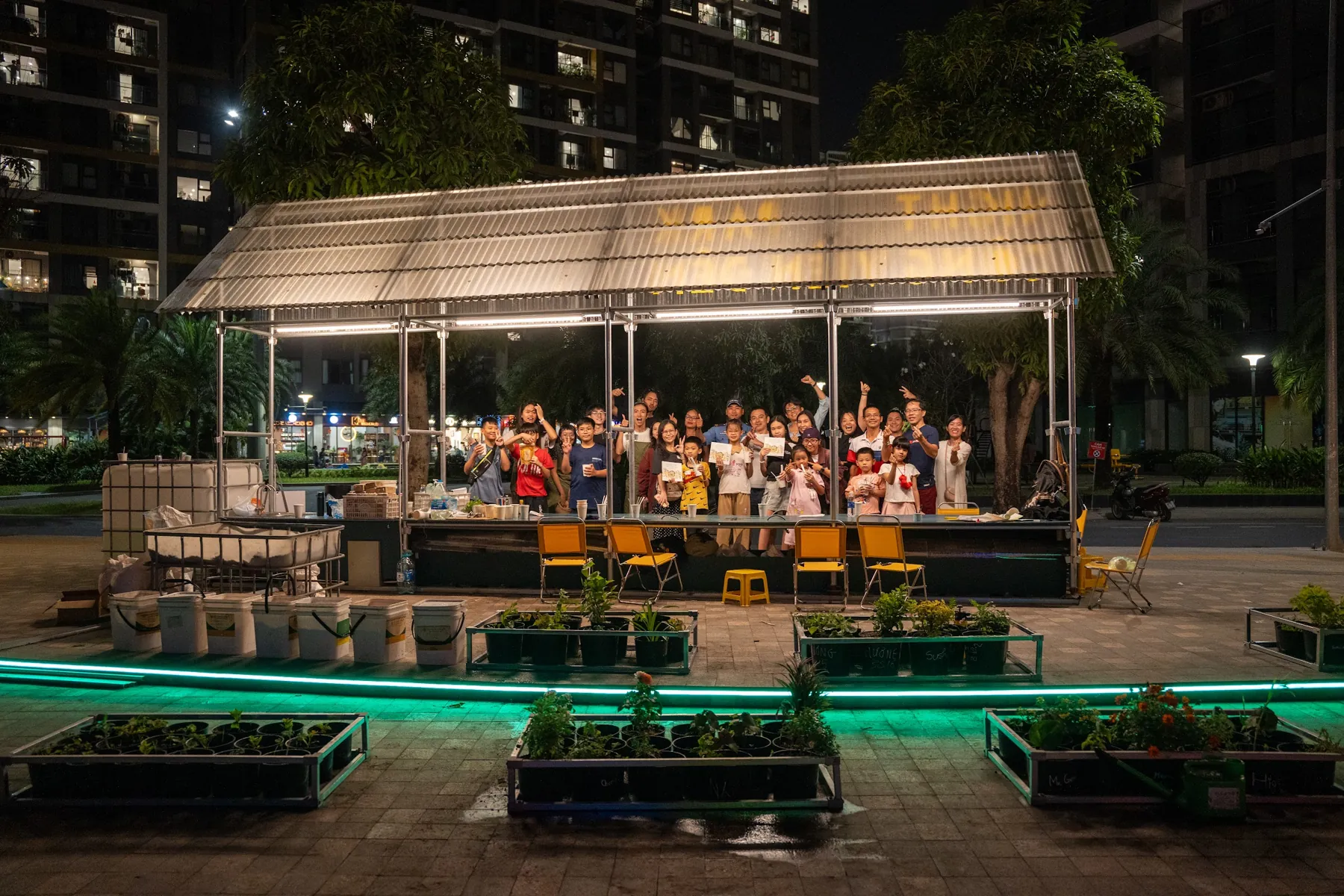
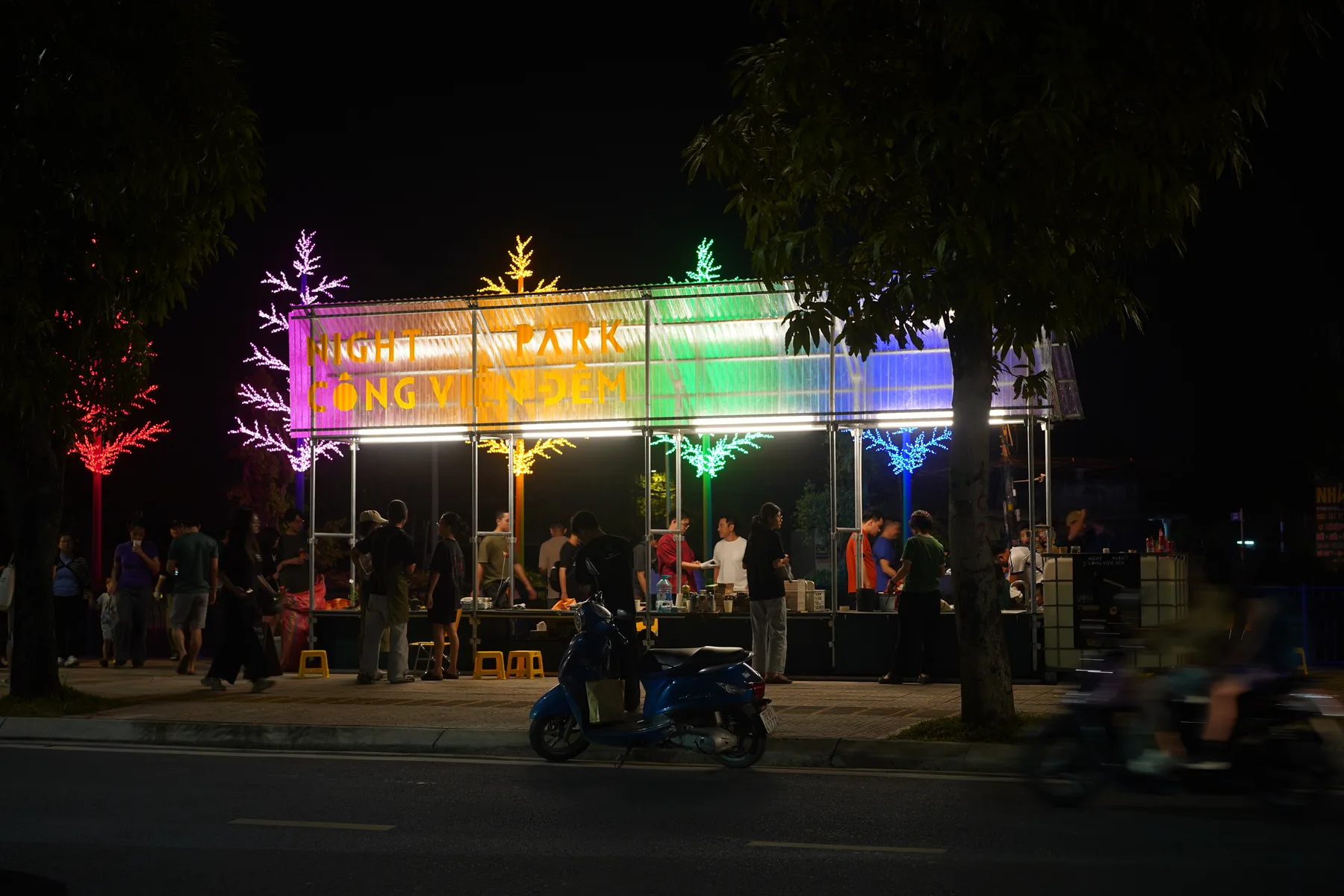
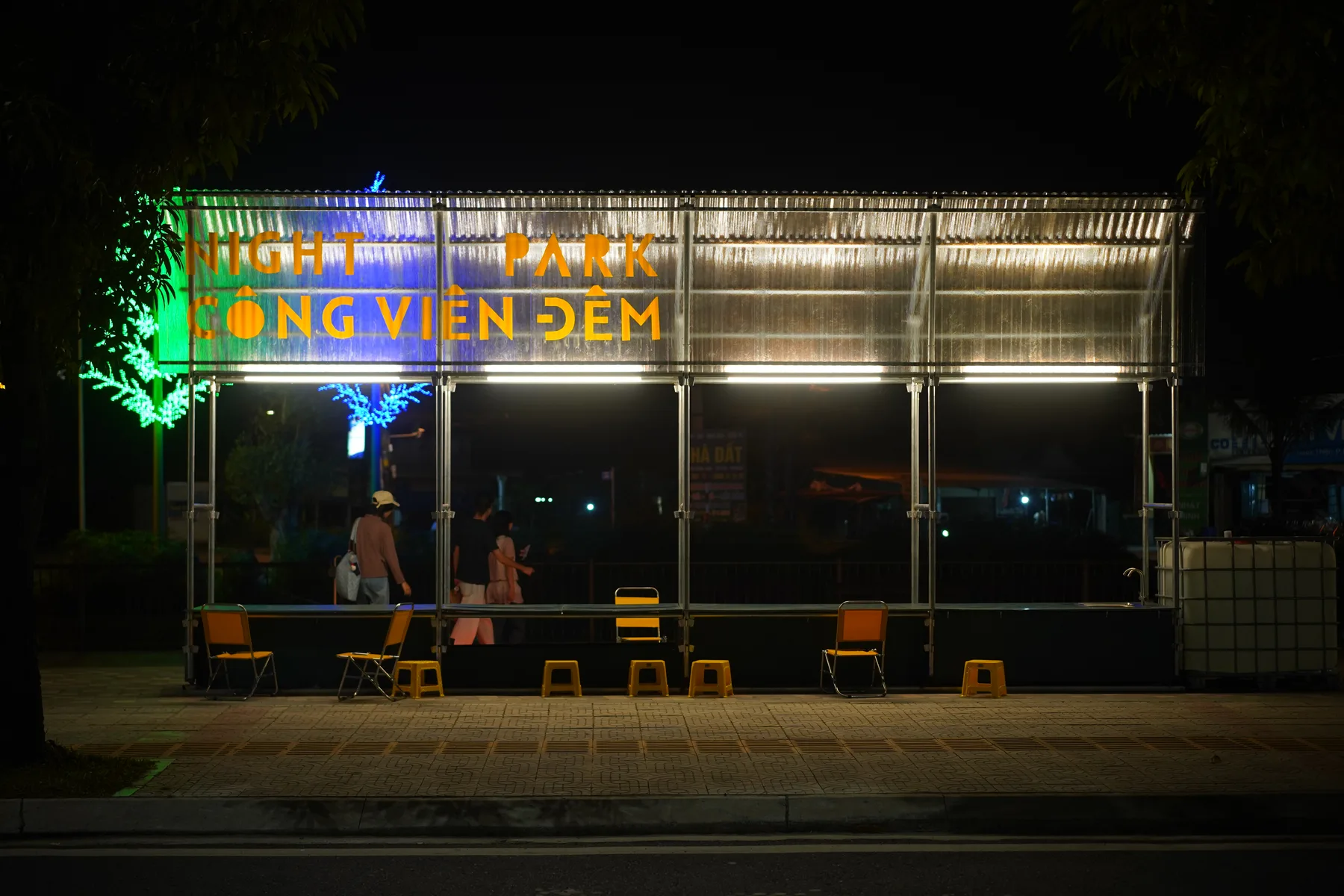
In a new development where the problems to solve have not yet been put into words, it is faster to place something, watch, adjust and place again, and so discover the problem itself, than to apply a ready-made answer. On 20 December 2025 we set up structures built on the same idea at two spots in the township, Riverside by the river and the central plaza, and began observing them in their barest form.
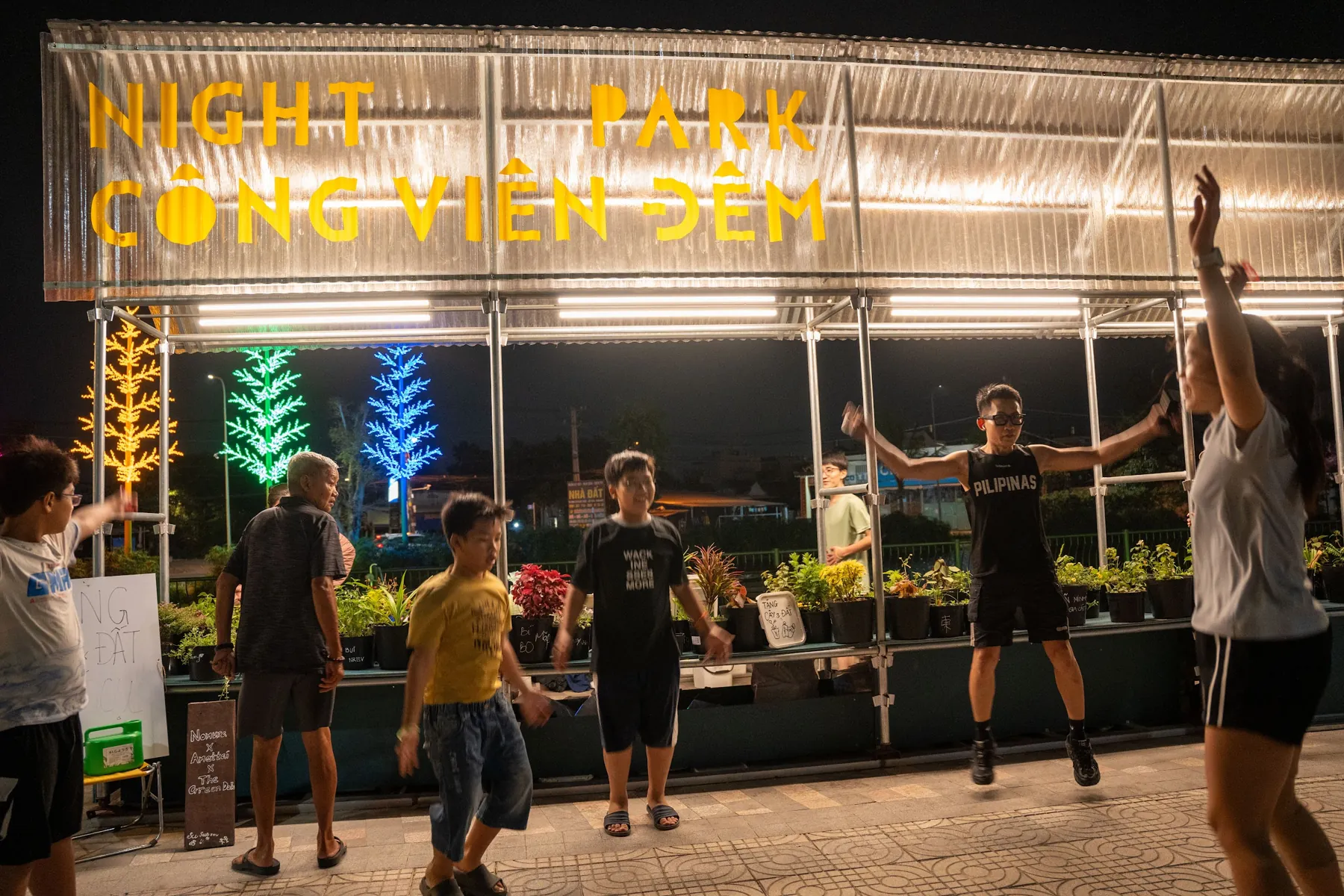
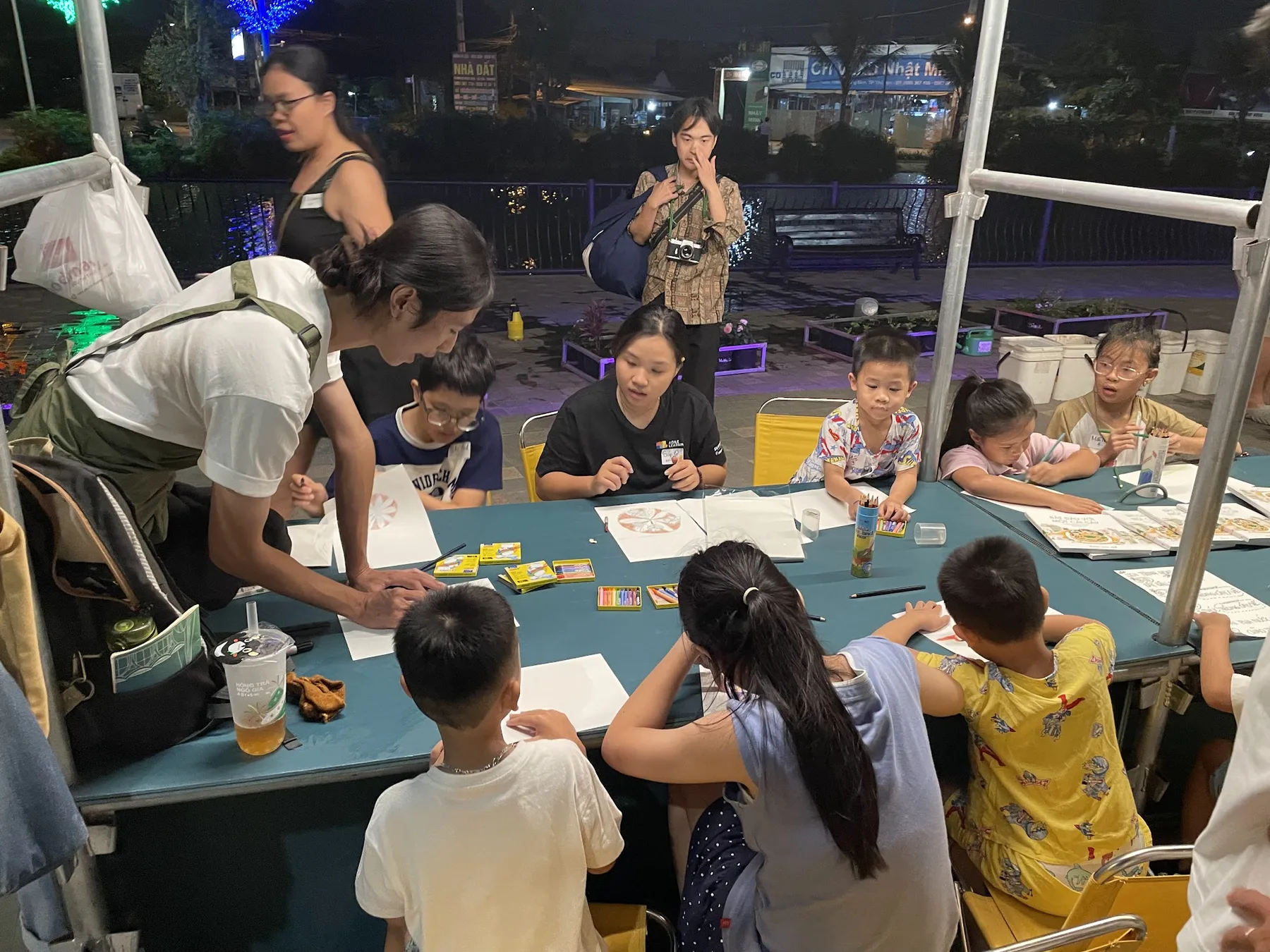
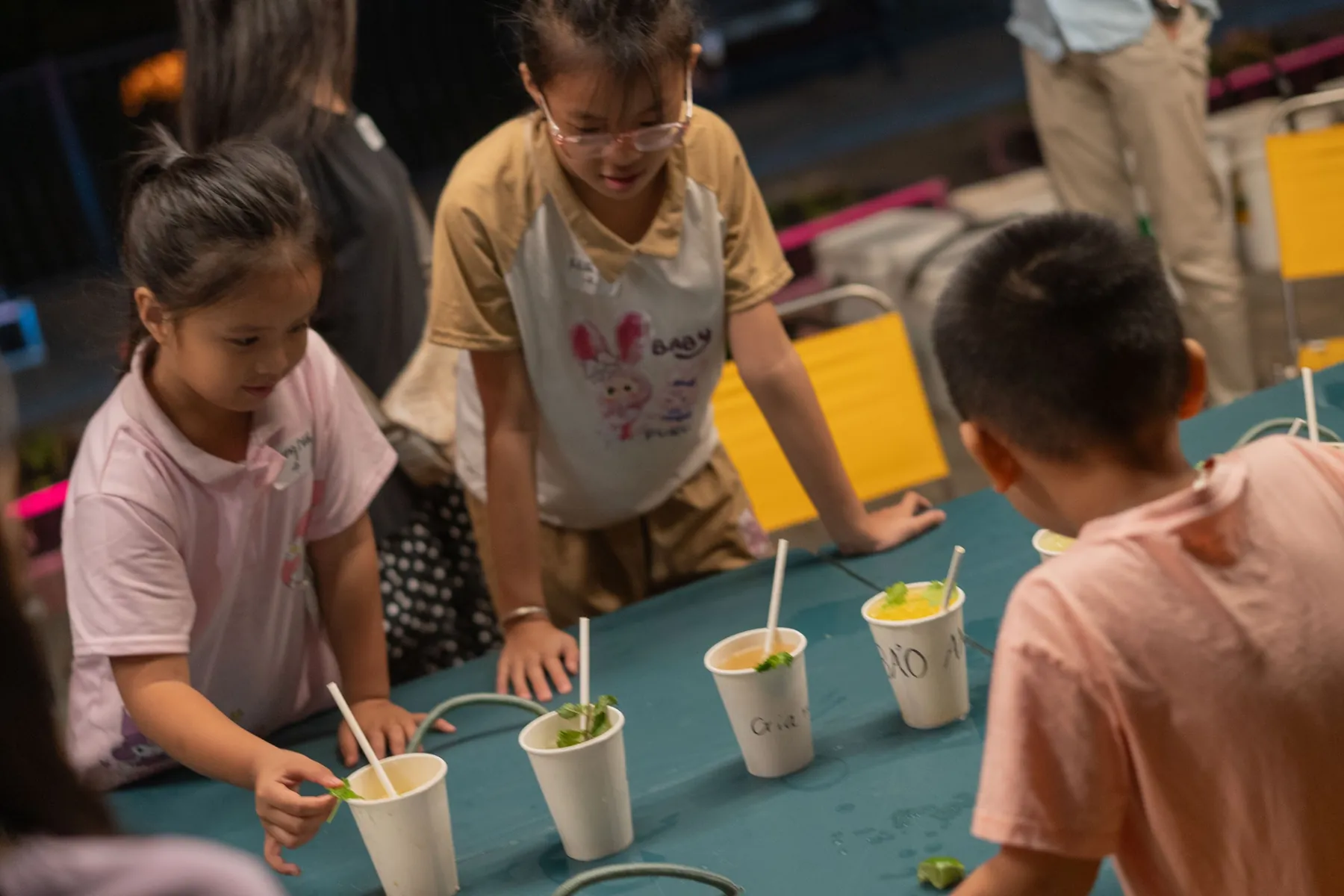
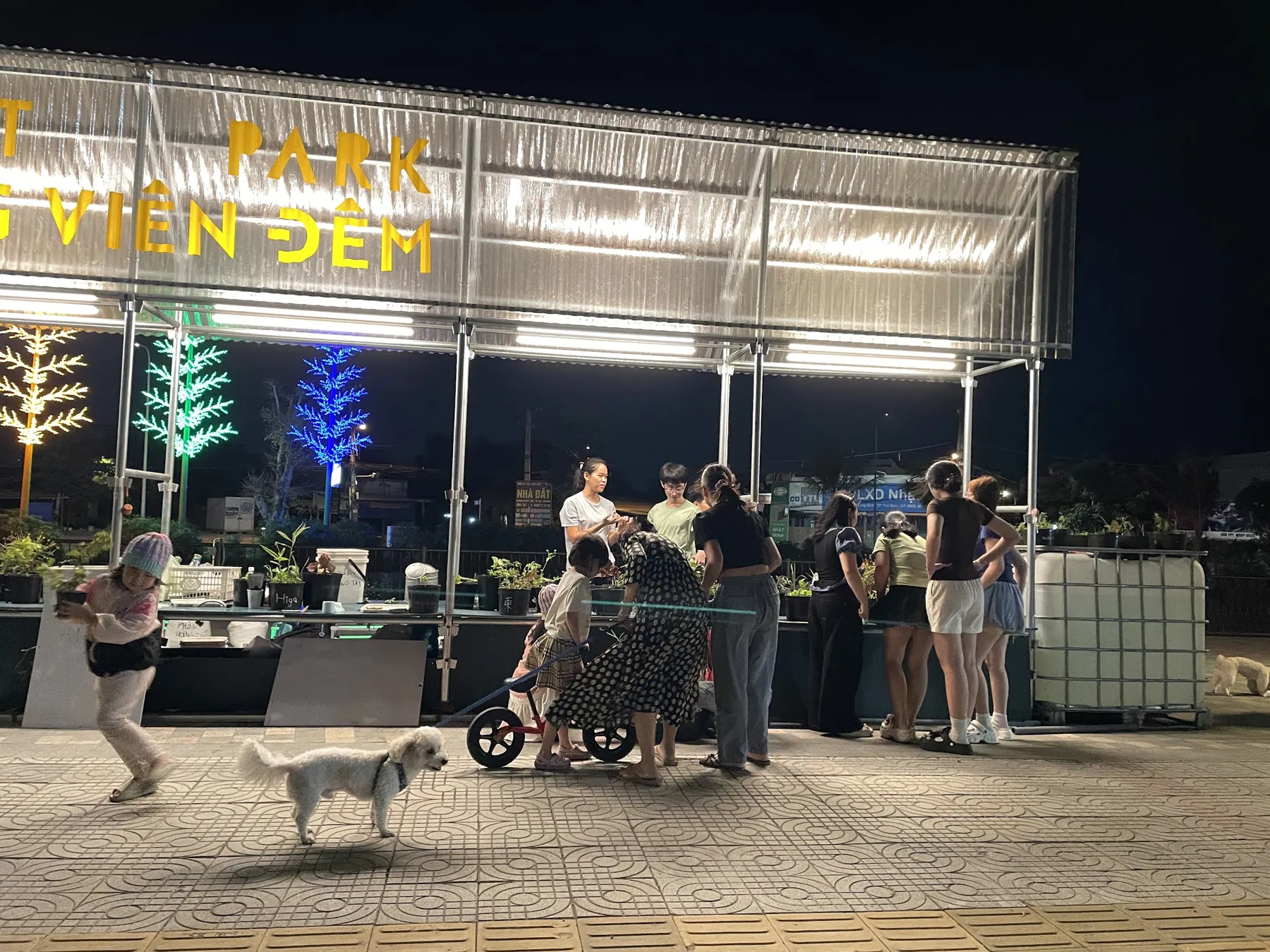
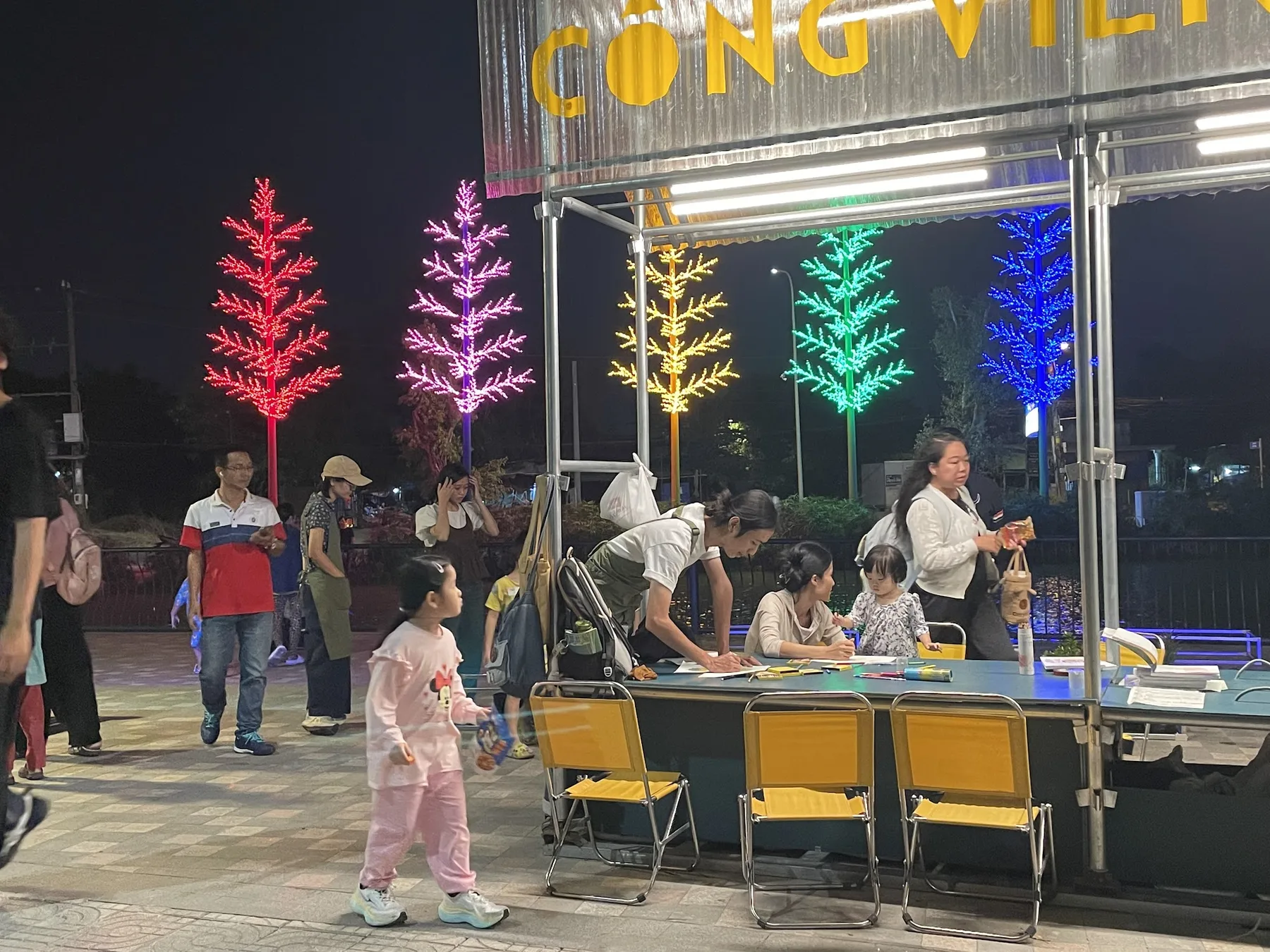
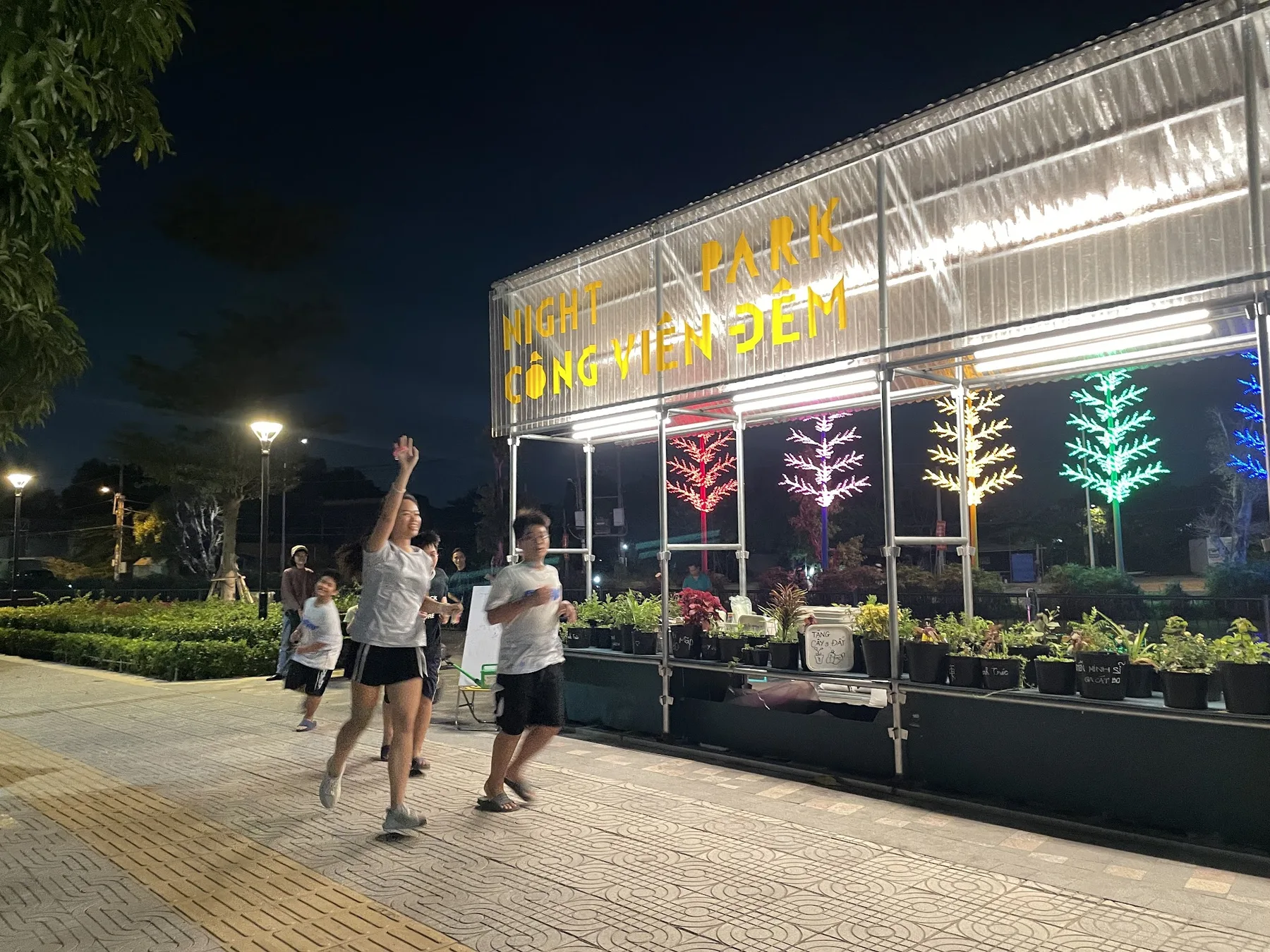
Each structure had a sink for washing hands and preparing water for plants, and a waterproof storage box that closes into a table, surrounded by raised planters. From there we added one thing at a time as we watched residents respond: chairs, a logo and stickers, an information stand, planters and gardening tools, a chessboard. There were three workshops, and we tried activities anyone could join briefly, from planting to sketching, board games, and a jogging-and-tree-planting game.
From “Is this a sales booth?” to “When's the next one?”
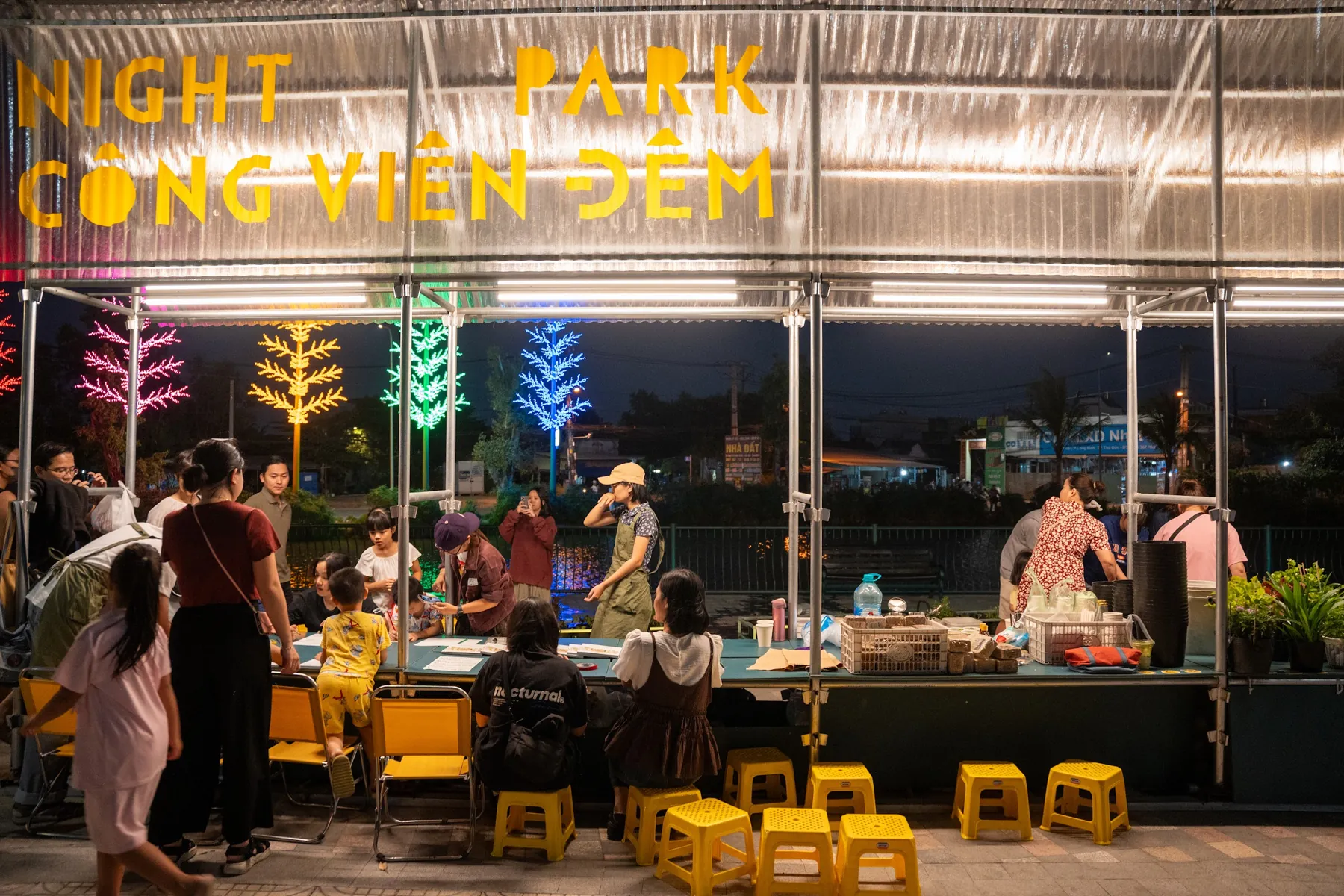
In the first days, residents kept their distance, calling out “good luck” and taking the place for a food stall, a sales booth or a bus stop. More people made sense of it by asking someone on site than by reading signs, and having interns there sped up understanding.
At the first workshop on 10 January, children joined first and parents stayed with them. Three days later, a resident who had missed it brought rosemary and planted it. Questions shifted from “What is this?” to “How can I join?” and “When's the next one?”, and by the end of the month people were also eating, talking and making video calls there. On the day of the last workshop, some people pitched in to help and took plants and soil home. As the removal date approached, we heard “What a waste”, “Aren't you continuing?” and “Will you come back after the long holiday?”
Bringing the balcony into public space
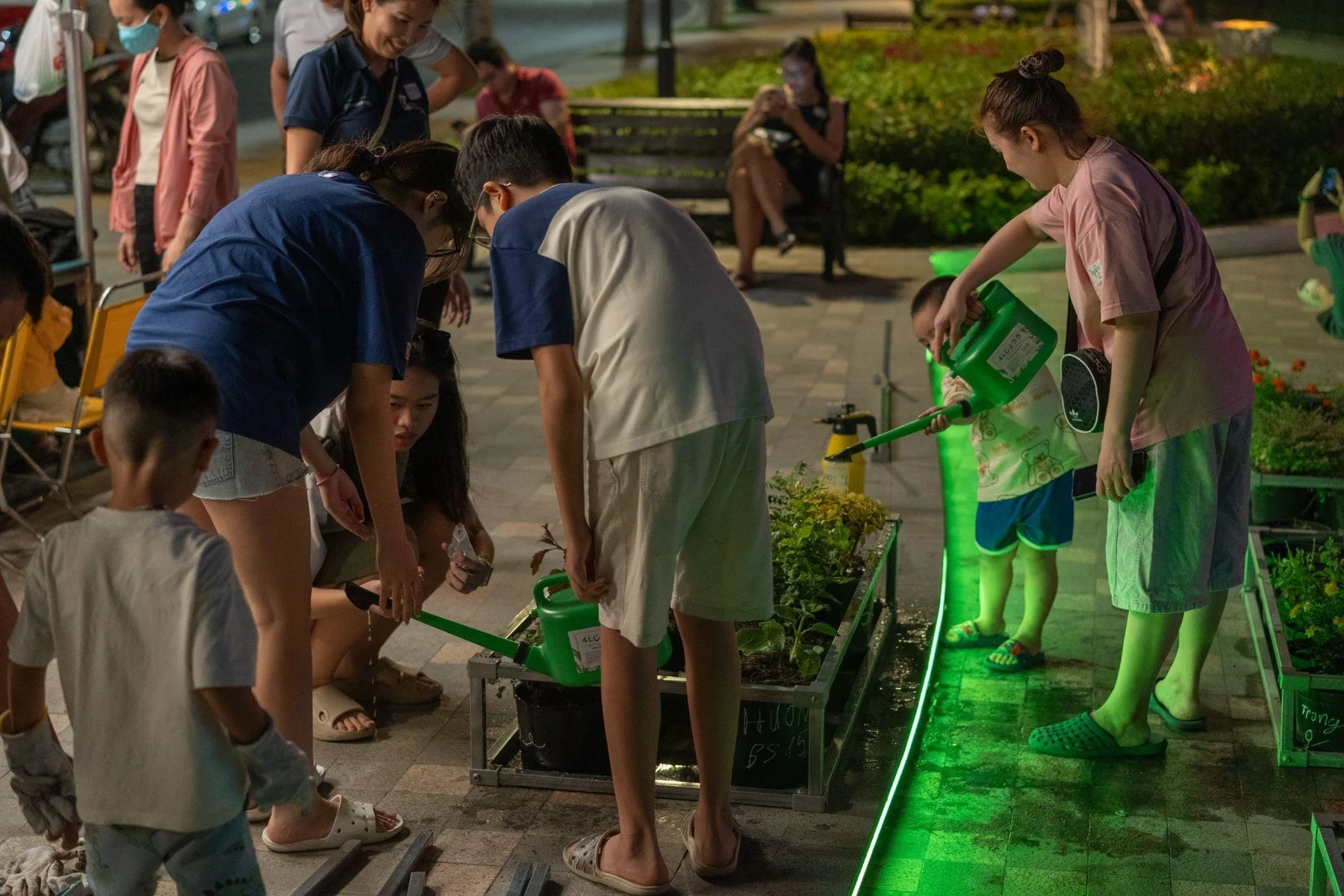
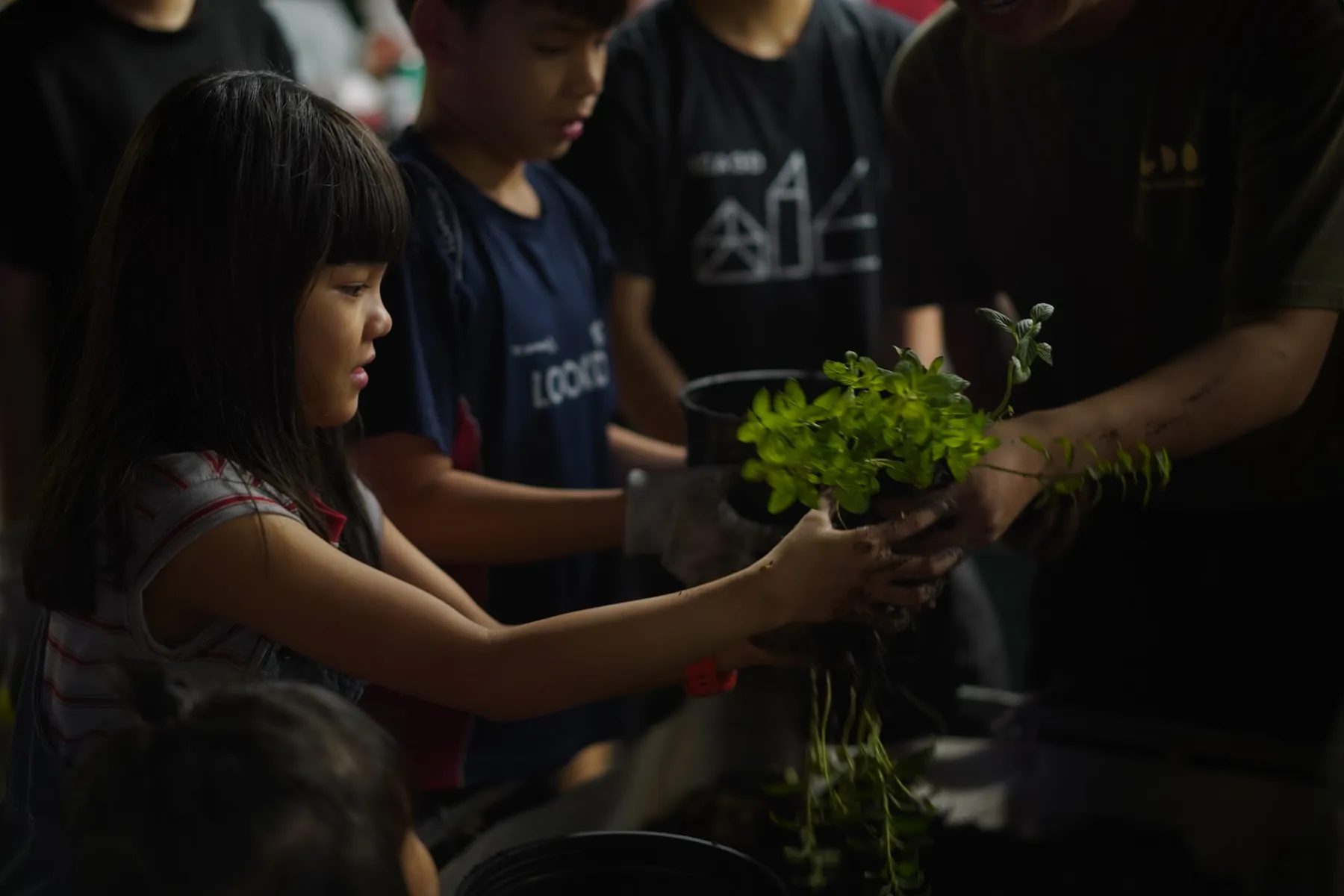
Gardening came in not as the right content, but as a hypothesis for creating reasons to drop by and keep coming back. Potted plants are part of everyday life in Saigon homes, yet the shared ground of a township leaves almost no room for personal activity. We gently extended what people do on their balconies into public space, to see whether working with their hands would lead to conversation and return visits.
Children were the way in. Given something they could touch, move and do together, they joined in at once; their parents stopped, and others around them learned that this was a place they were allowed to use.
A place to stop, and a place to pass through
The two sites turned out very different. Riverside, by the river, had a gentle flow of walkers, and conversation and parents lingering to watch their children came easily. The central plaza had heavy foot traffic, and without a reason to stop, people simply passed through. There were outdoor problems too: lighting too bright to relax, paper blown away by the wind, game pieces going missing.
Even so, when we dimmed the lights at the central plaza and added games that could be started in a few minutes, there were evenings when people joined in and conversations began. The same device works under different conditions depending on the character of the place, an important clue for choosing where to go next.
After decorative luxury, livable luxury
In Vietnam's townships, decorative luxury, created by lighting, ornament and landscaping, is a powerful selling point. But that value is complete the moment the buildings go up, and rarely grows with time. A place to stop for even five minutes, somewhere parents and children feel safe, neighbours exchanging a few words: experiences of living like these deepen the longer you live there. A brand that peaks not at completion, but gets better the longer you live in it.
The pattern of children leading and parents following, and the approach of adding a little at a time, carried over to Season 2 in Phu My Hung.
INFO
- Host
- Nomura Real Estate Vietnam (NREV)
- Location
- Riverside and the central plaza, Vinhomes Grand Park, Ho Chi Minh City
- Dates
- 20 December 2025 – 9 February 2026 (seven weeks)
SCOPE
- Business design
- Planning & communication design
- Operations
CREDIT
- Host
- Nomura Real Estate Vietnam (NREV)
- Integrated design
- NEWSKOOL LLC
- Design
- studio anettai (Takahito Yamada / Nobuhiro Inudoh / Hirose Tsuchiya / Minh Nhựt)
- Workshop design
- The Green Dots (Ninh Khánh / Thành Tựu)
- Research
- Nguyễn Trọng Nhân / Lâm Phương Mai / Trần Thị Xuân Mai
- Logo
- NEO
- Construction
- Metta
- Support
- Nai
- Photography
- Hirose Tsuchiya